

This is not a test of whether you like the coffee. Nobody is asking whether it is balanced or fruity. Triangulation asks one thing: can you tell a difference between three samples, when two of them are identical and one is slightly not. It is the simplest and one of the most reliable ways to check whether a change in the sensory profile actually happened, or whether we imagined it.
What a triangle test is made of
Three cups. Two hold the same coffee, the third holds something else: a different lot, a different roast, or simply a different bag. The taster, whether that is you or a whole panel, has to point at the odd one out. Sounds straightforward. It is not, quite.
Why not? Because if you ignore a few ground rules, the result is about as trustworthy as comparing three margarines on a Sunday morning after a party.
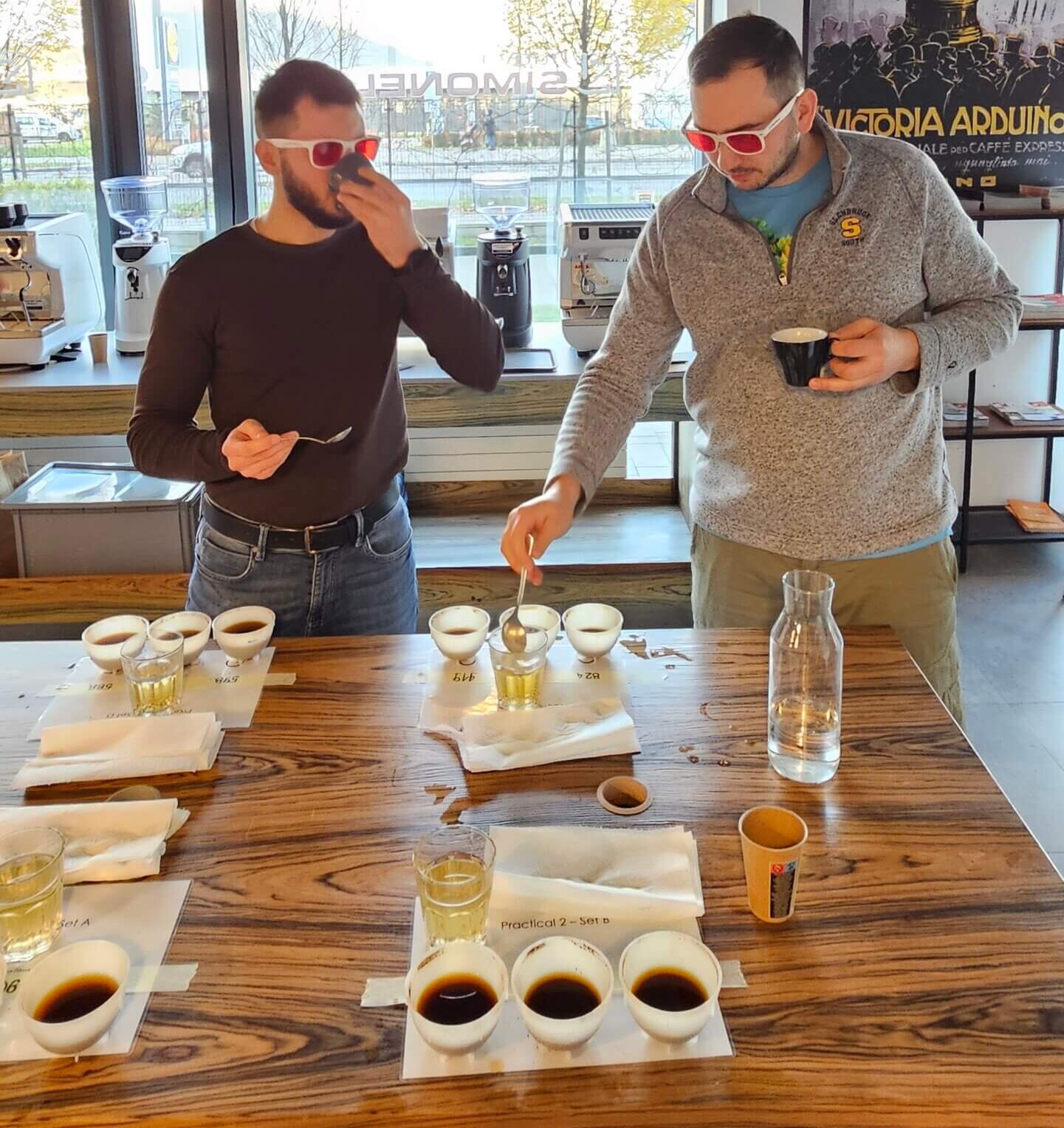
Blind codes, so you cannot fool yourself
Every cup gets a random three-digit code. Why does that matter? Because our brains love a pattern, and if the middle cup turns out to be the odd one a few sessions running, panellists will start picking the middle without smelling anything at all. So you use one of the six possible arrangements (AAB, ABA, BAA and so on) and change the order in every session.
There is no room for guesswork. Everything is controlled. This is science, not a party game.
The real question: how many tasters do you need?
In theory you can run it on your own, as training. For a result anyone will believe, you need at least 20 people. Why 20? Because that is the point where the statistics say that if 11 of them pick correctly, you are looking at a real, perceptible difference at a significance level of 0.05.
Need hard evidence for a customer or an investor? Raise the bar to p = 0.001. Then you need at least 14 correct answers out of 20. There is no way around that.
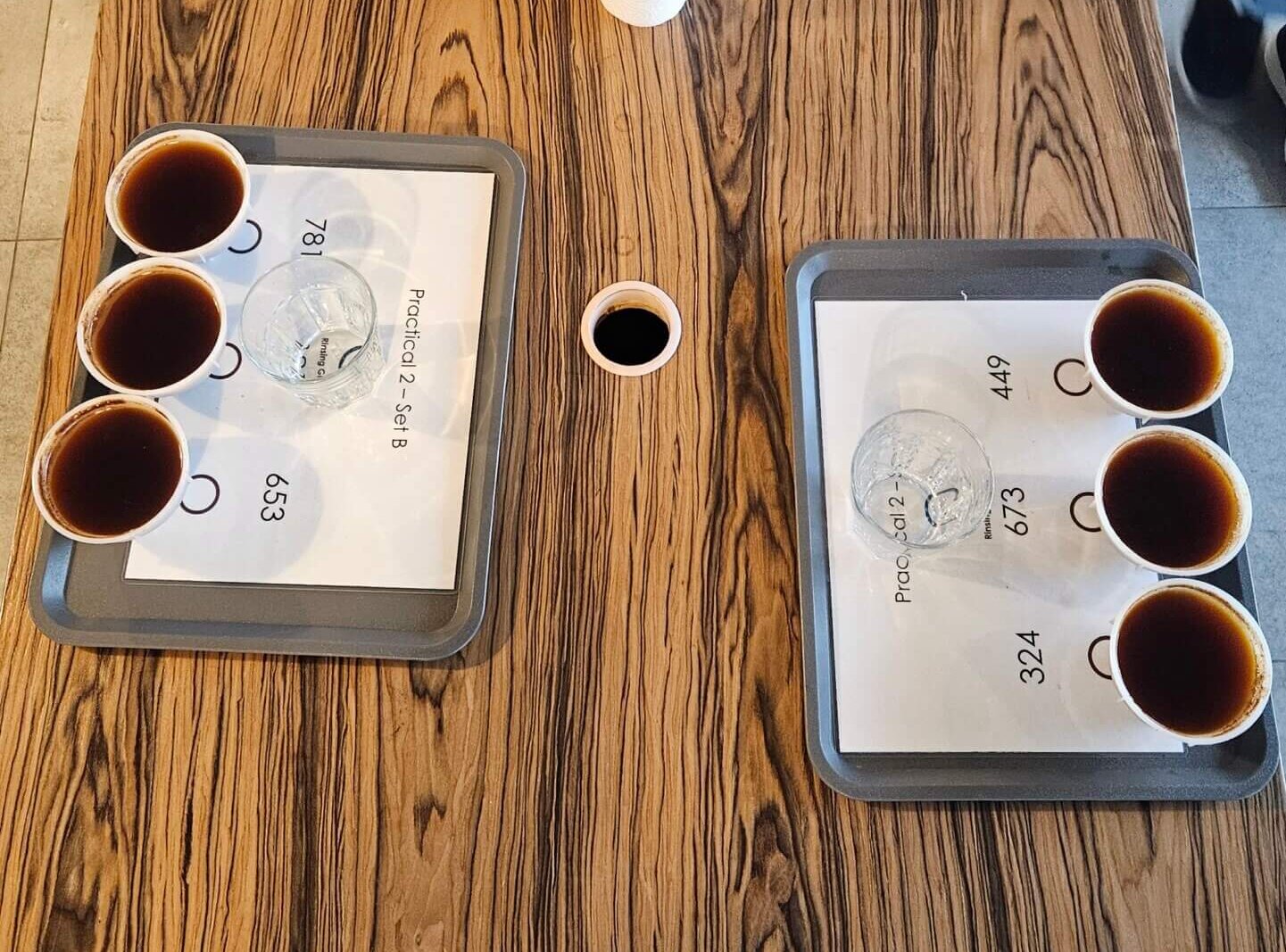
What usually ruins the result
-
No randomised order, so panellists guess.
-
Too few tasters, so the numbers say nothing.
-
Poor sensory hygiene, so flavours carry over between cups.
-
The wrong question. Triangulation does not pick the better coffee, it only checks whether there is a difference at all.
One more thing. If the answers come out random, that does not prove the two coffees are the same. The panel may simply not be sensitive enough, or not properly prepared.
What you can do with it
More than you would think. You can run a triangle test in a cafe, in a roastery, even at home. A kettle, three cups and a few willing noses will do. Compare the old packaging against the new, two roast profiles, or the same coffee a week after roasting and a month after. You could fairly say that how a roastery runs these tests, or whether it bothers at all, is what separates a good coffee roastery from a weak one.
It gives you more than opinions off the internet. It gives you real evidence that something changed, or that it did not. In a world where everyone has a different view on the same coffee, that can be worth a great deal.
