

A barista’s job now goes well beyond working the machine. It takes knowledge of the beans, of flavour, of the equipment and of the person on the other side of the counter. So the question comes up a lot: is barista training really worth it, and does it show up in the quality of the work in a café? From working with venues every day, we know one thing. Good training can change a great deal.
What a barista does today, beyond making coffee
A barista is not simply the person who prepares the drink. They are a specialist who understands the whole process, from choosing the beans through grinding and extraction to what finally reaches the table. A good barista knows how to react to changes in temperature or in how fresh the coffee is. They can set the equipment up, keep the flavour under control and make it repeatable.
They are also the person who can talk to a guest about coffee, guide the choice and build a good experience in the café. None of that gets picked up by accident.
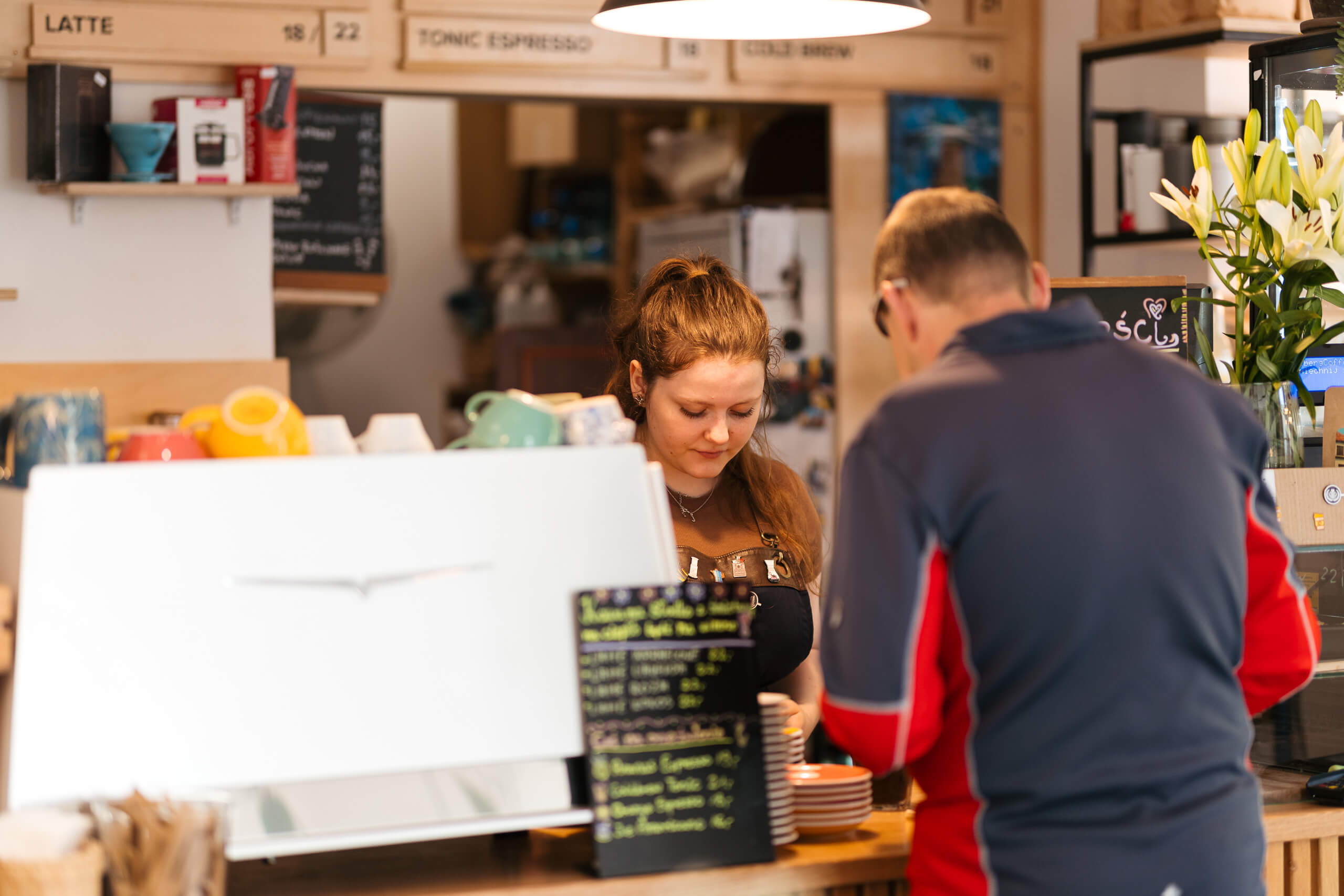
Why working behind the bar is often not enough
Plenty of baristas learn the job on the floor, watching colleagues and working it out by trial and error. That is a natural route and it has limits. Without solid foundations it is very easy to lock in bad habits that are hard to undo later.
We see it often: the grinder set badly, ratios nobody checks, equipment that is not cleaned to any schedule. Staff get used to working that way and start treating it as normal. The coffee suffers, and the team stops developing the way it could.
Training puts the knowledge in order and shows why some approaches work better than others.
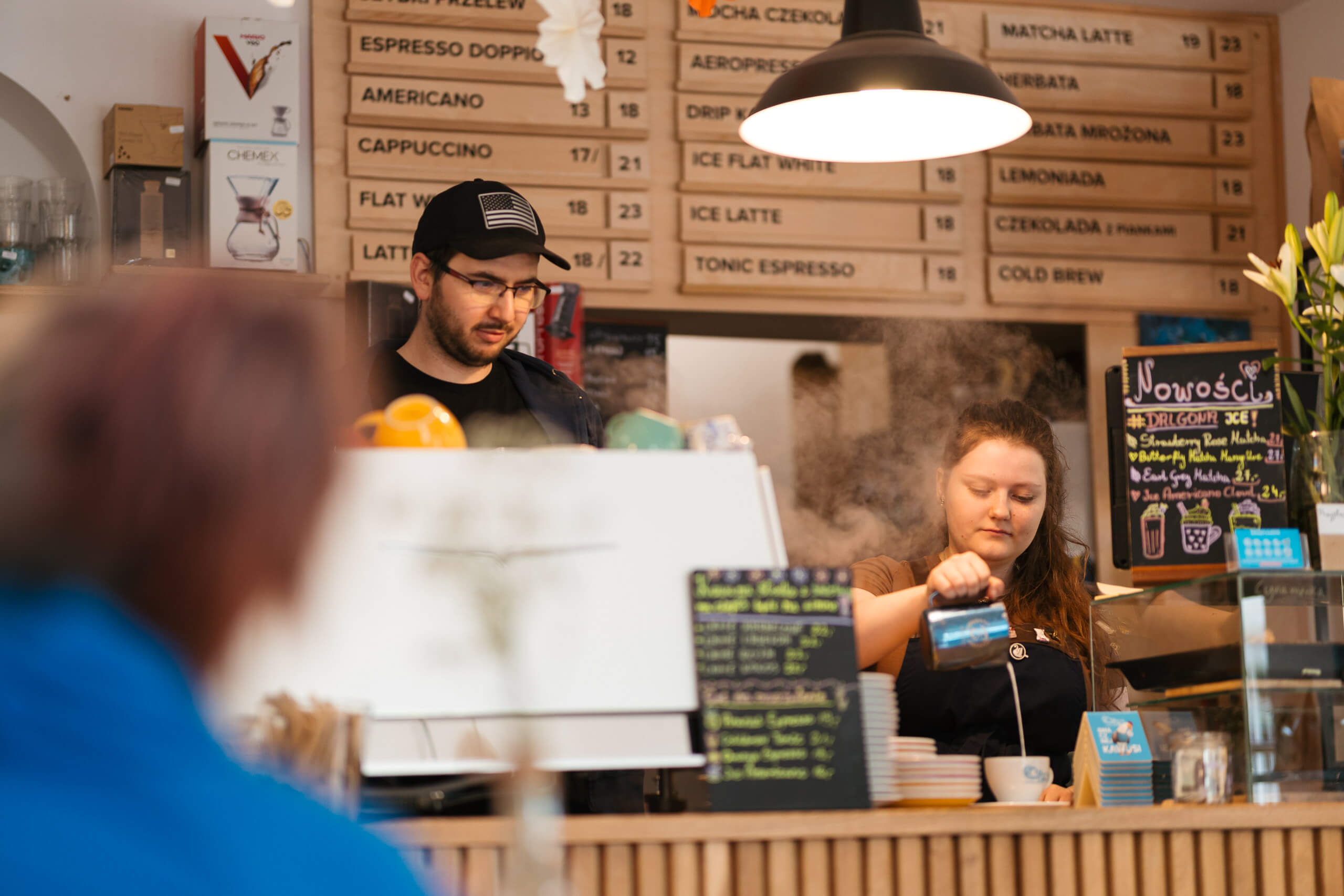
What good barista training gives you in practice
Good barista training is hands-on above all. Work on the real equipment, with the coffees that genuinely end up in guests’ cups, in conditions close to a normal service.
Training teaches a barista to control the brewing process deliberately. They start to see how a change in grind, temperature or ratio moves the flavour. Under-extraction, over-extraction or a brew that is simply out of balance get spotted much faster.
Confidence matters just as much. After training a barista works more calmly, makes decisions on purpose and no longer runs on instinct alone. That is what gives you stable coffee quality.
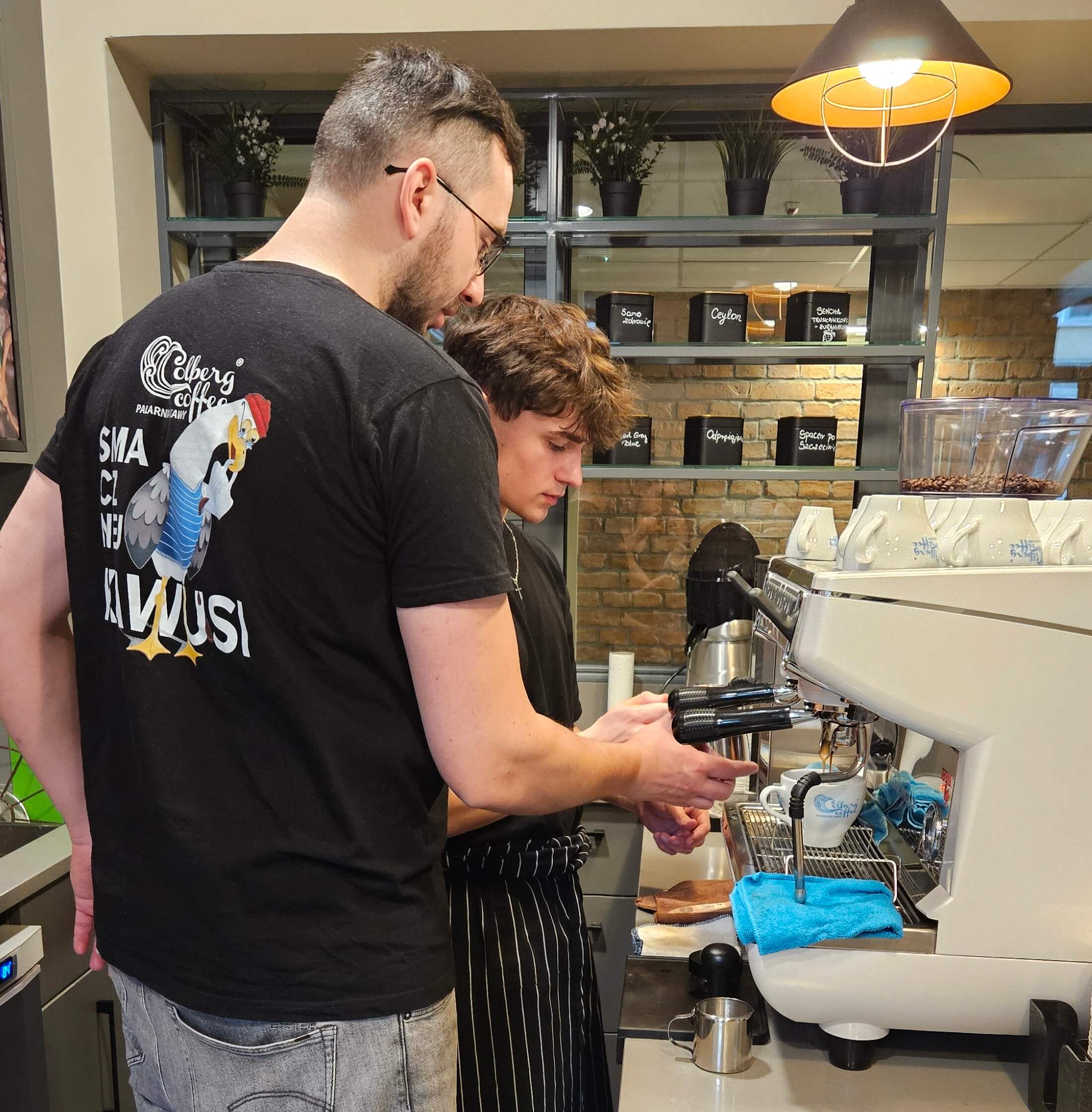
How training changes the way a café runs
Barista training has a big effect on the whole venue. When the team works to shared standards, the coffee becomes repeatable and guests know what to expect.
A well-trained team copes better with the rush, reacts faster to technical problems and makes fewer expensive mistakes. Complaints drop, communication inside the team improves and the atmosphere on shift gets steadier.
From what we see, training also cuts staff turnover. People who feel they are developing are more willing to stay.

How we run barista training
When we work with a café, we always start from what the team actually needs. We do not run sessions to a single template. Every venue has its own character, its own equipment and its own menu.
We work on the machines, grinders and coffees our partners use day to day. We go through the workflow, the settings and the way the bar is organised, and help tighten them up. The focus stays on what really moves coffee quality and makes the shift easier.
Follow-up sessions are just as important. Equipment changes, new people join the team, the menu grows. Meeting regularly keeps the standard high and keeps pushing it up.
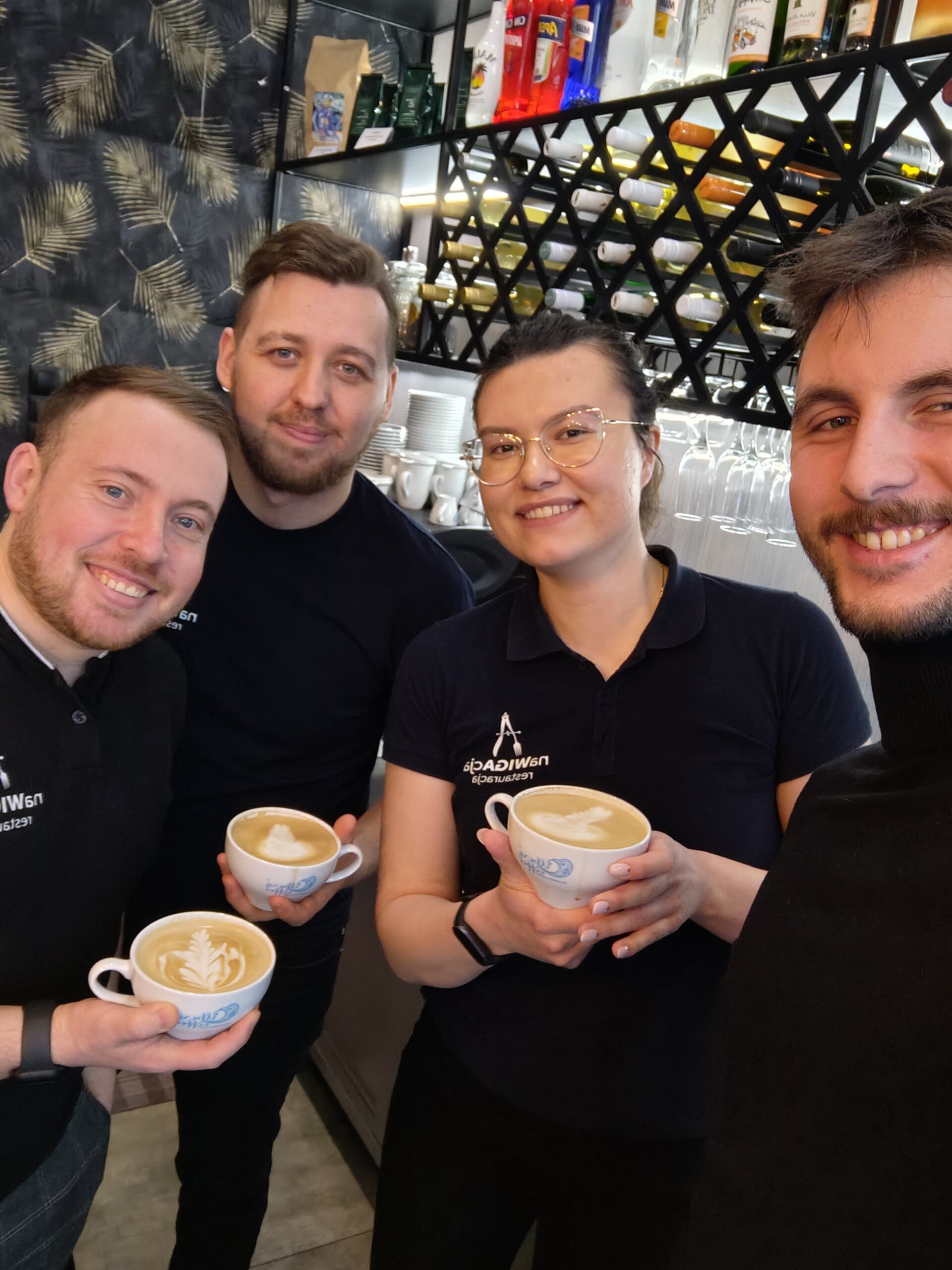
So, is barista training worth it?
Barista training is one of the simplest ways to raise the standard of work in a café. It gives baristas more confidence, and it gives owners real control over the flavour and the standards of the coffee they serve.
With our partners we play the long game: not one session and goodbye, but ongoing support for the team, the right coffee, and work on the equipment that is actually in the venue. That is what makes the change stick instead of fading after a fortnight.
For us, a good partnership means sharing responsibility for what ends up in the cup. When a barista has the knowledge, the tools and the backing, the coffee starts making its own case, and that is the best advert any café can have.
FAQ: barista training, the questions we get asked
Does a beginner need barista training?
Yes. Good training at the start helps you pick up the basics faster, build good habits and avoid mistakes that are hard to correct later.
How long does barista training take?
It depends on the scope and the level. Basic sessions usually run from a few hours to a full day, and more involved programmes can stretch over several meetings.
Does training improve the taste of the coffee a café serves?
Yes. Training covers extraction control, grinder settings and working with the equipment, and all of that feeds straight into better and more repeatable coffee.
Is it worth training the whole team rather than one person?
Definitely. A team trained together works to the same standards, which makes quality and the organisation of the bar much easier to hold.
Do barista training sessions need repeating?
Yes. Equipment, coffees and team line-ups change, so follow-up sessions help keep the standard high and keep developing it.
