Warsaw hosted its annual Warsaw Coffee Festival 2025, bringing together over 140 companies from across the coffee trade: roasteries, machine manufacturers and the people setting the direction the industry takes. This year the Colbergcoffee roastery made its festival debut, and our approach to espresso drew a steady crowd to the stand.
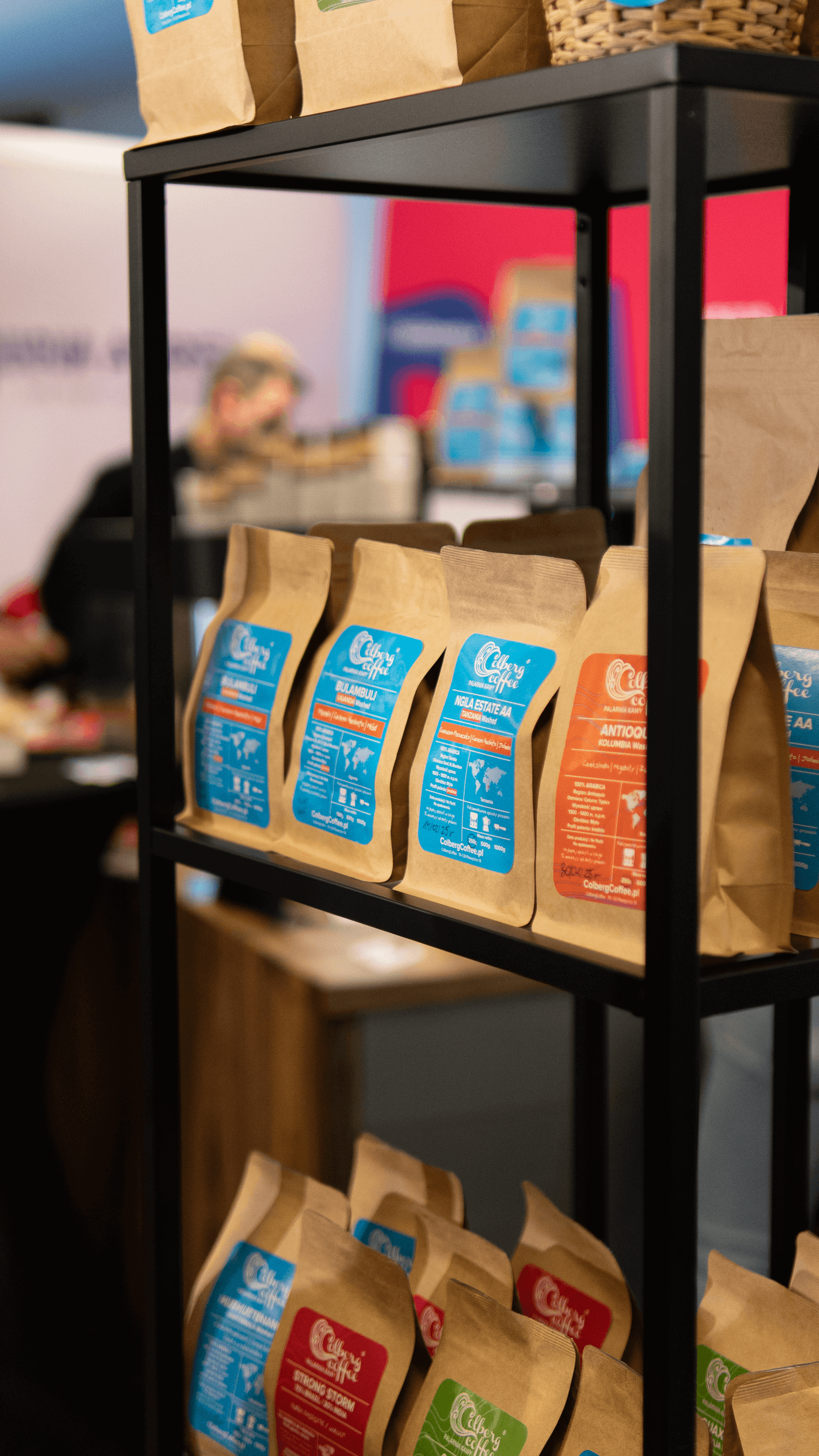
The roastery stand at Warsaw Coffee Festival
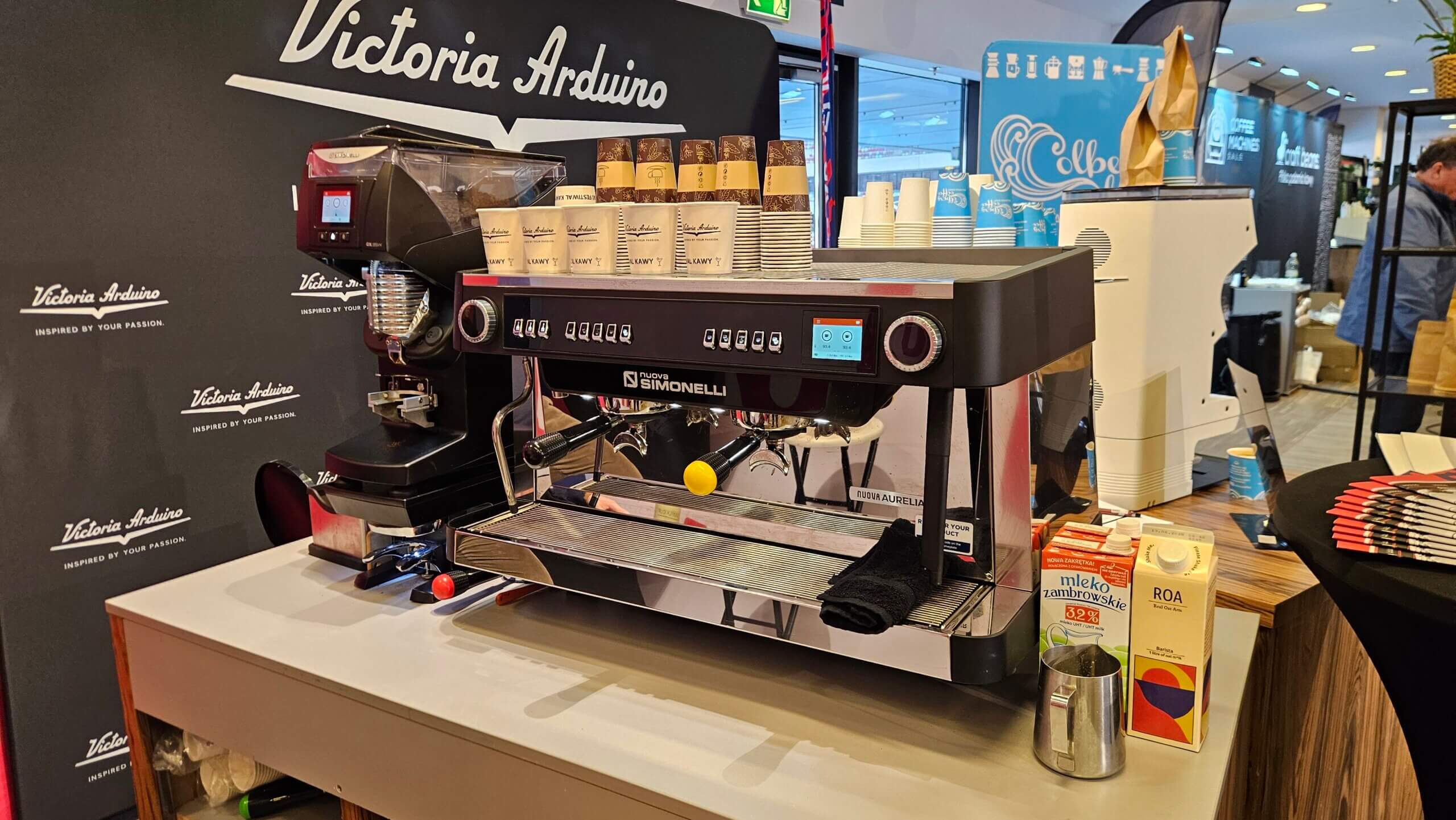
Our stand was built around espresso, pulled on a Victoria Arduino Eagle Tempo, a machine that stands for precision. Working with Nuova Simonelli and Victoria Arduino lets us put the best available technology in front of people, machines and grinders alike.
We poured two new espresso coffees:
-
Tanzania Ngila Estate Espresso, a strikingly fruity coffee led by redcurrant, black tea and jasmine, a pleasure in every sip.
-
Uganda Bulambuli, currently our best espresso. Its range runs from clear apricot through the gentle bitterness of black tea to honey sweetness. What sets it apart is not only the depth of aroma but how well the parts hold together, enough to win over the fussiest drinkers.
Our roastery delivers to Warsaw, and you can order online.
Trade meetings at the festival
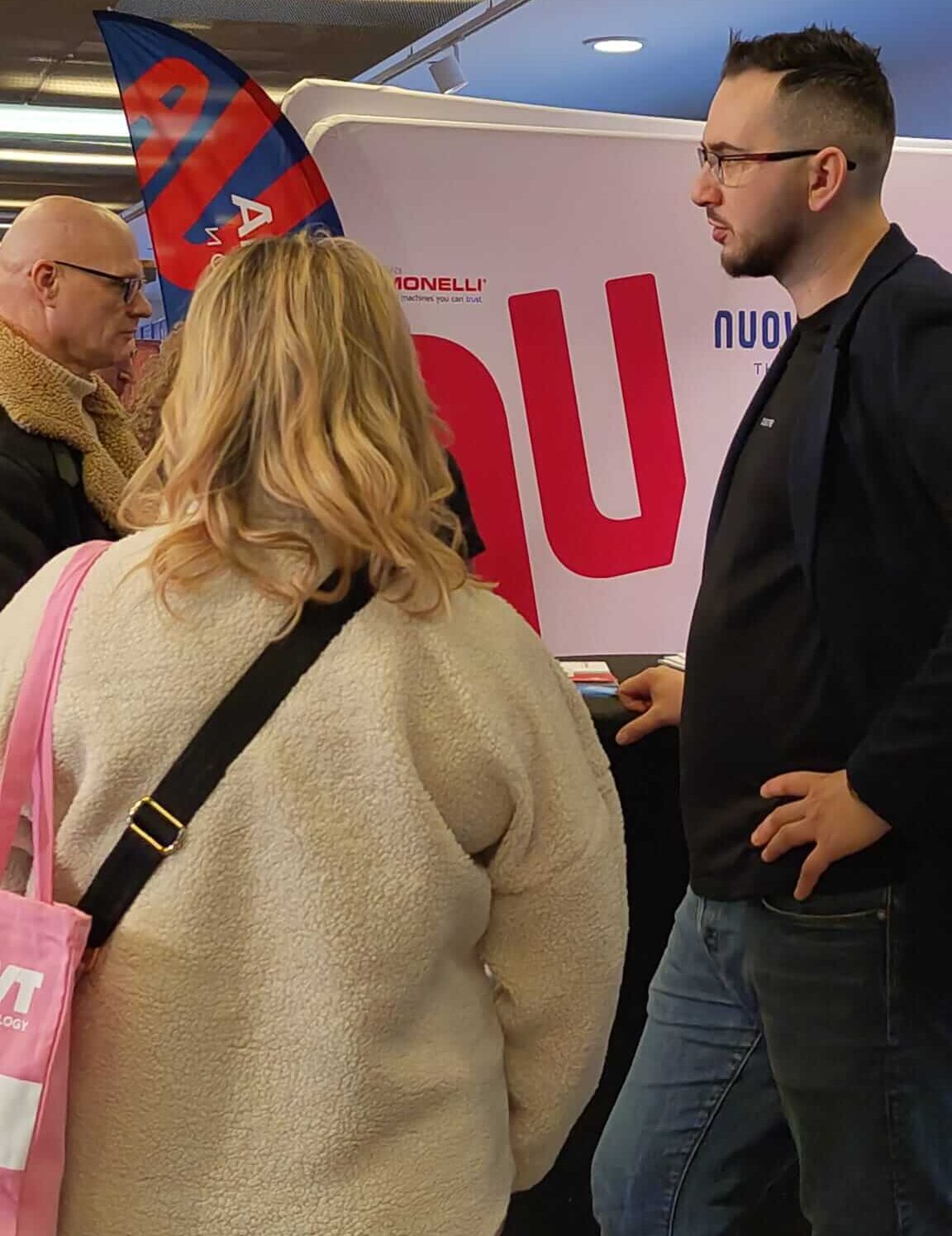
The stand drew coffee enthusiasts, but also plenty of people from the hospitality trade: owners of cafés, restaurants and hotels. Many already knew us from our work in Kołobrzeg and the West Pomeranian region and came over to taste the coffee for themselves and swap ideas. The conversations, and the reactions, confirmed that what we are chasing lands with people.
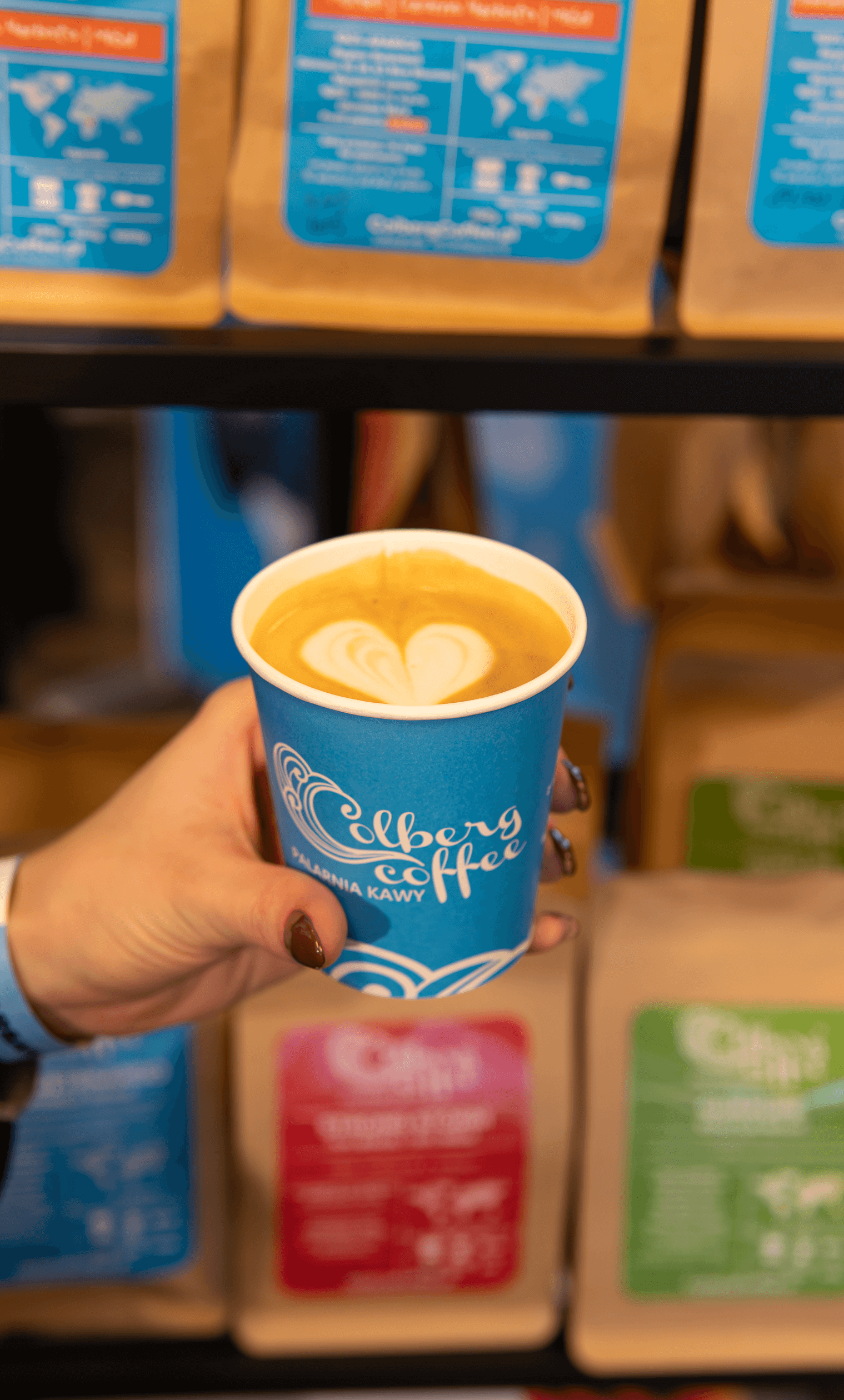
The festival also brought a run of valuable business contacts, with us showing the full offer: green-to-cup quality beans, machines, and barista training. Our barista Szymon Szatkowski pulled shots and built milk drinks on ROA oat drink, a product we distribute. Hearing directly from customers that it works keeps us confident that investing in quality pays off.
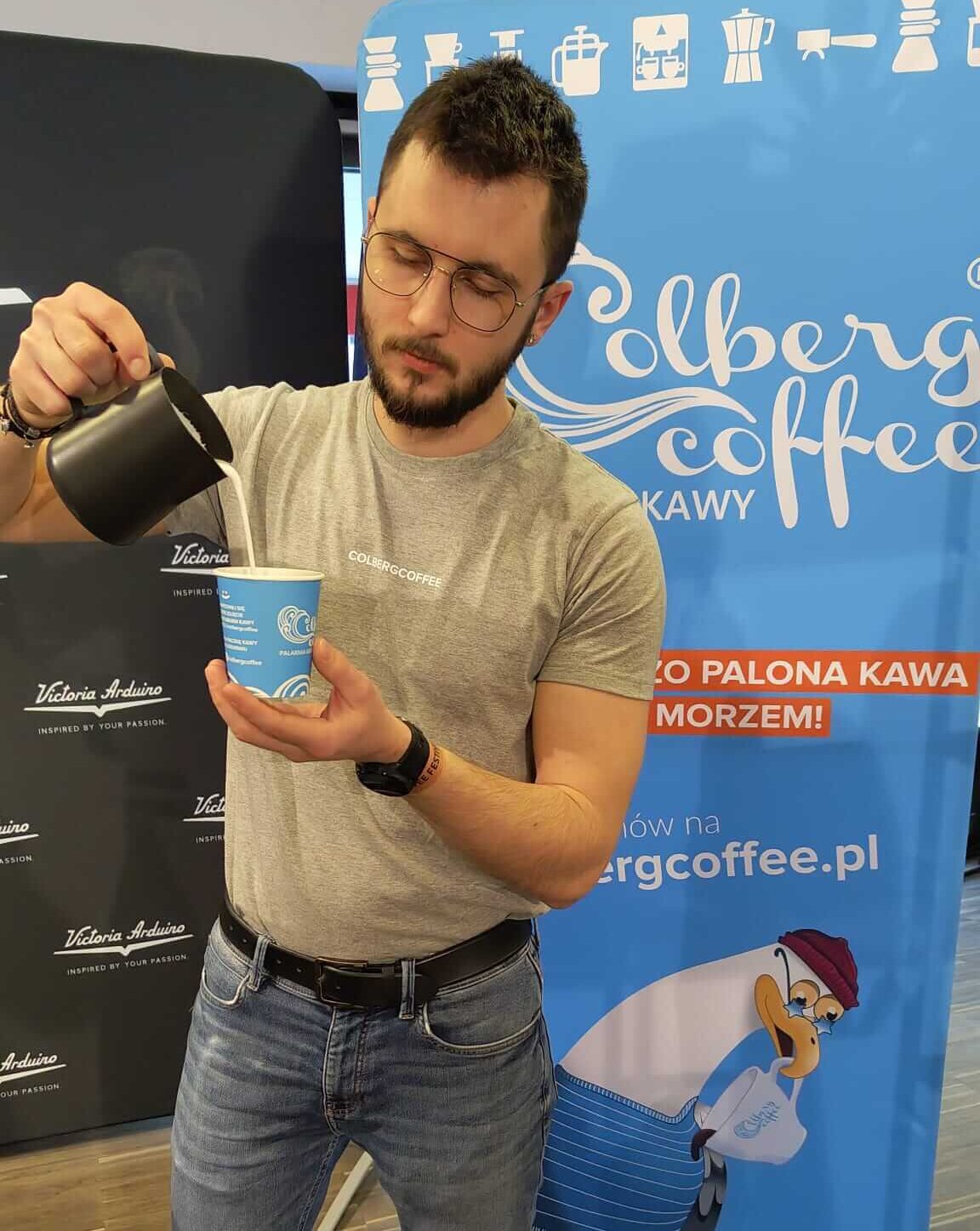
Polish Barista Championship and Brewers Cup 2025
The Polish Barista Championship and the Brewers Cup were among the main draws of the festival, pulling in enthusiasts, specialists and press alike. The rules follow Specialty Coffee Association standards, so competitors had to get every part right: grind, extraction time, and a consistent espresso profile across the round. The organiser is SCA Poland, the national body for specialty coffee, which Colbergcoffee belongs to.
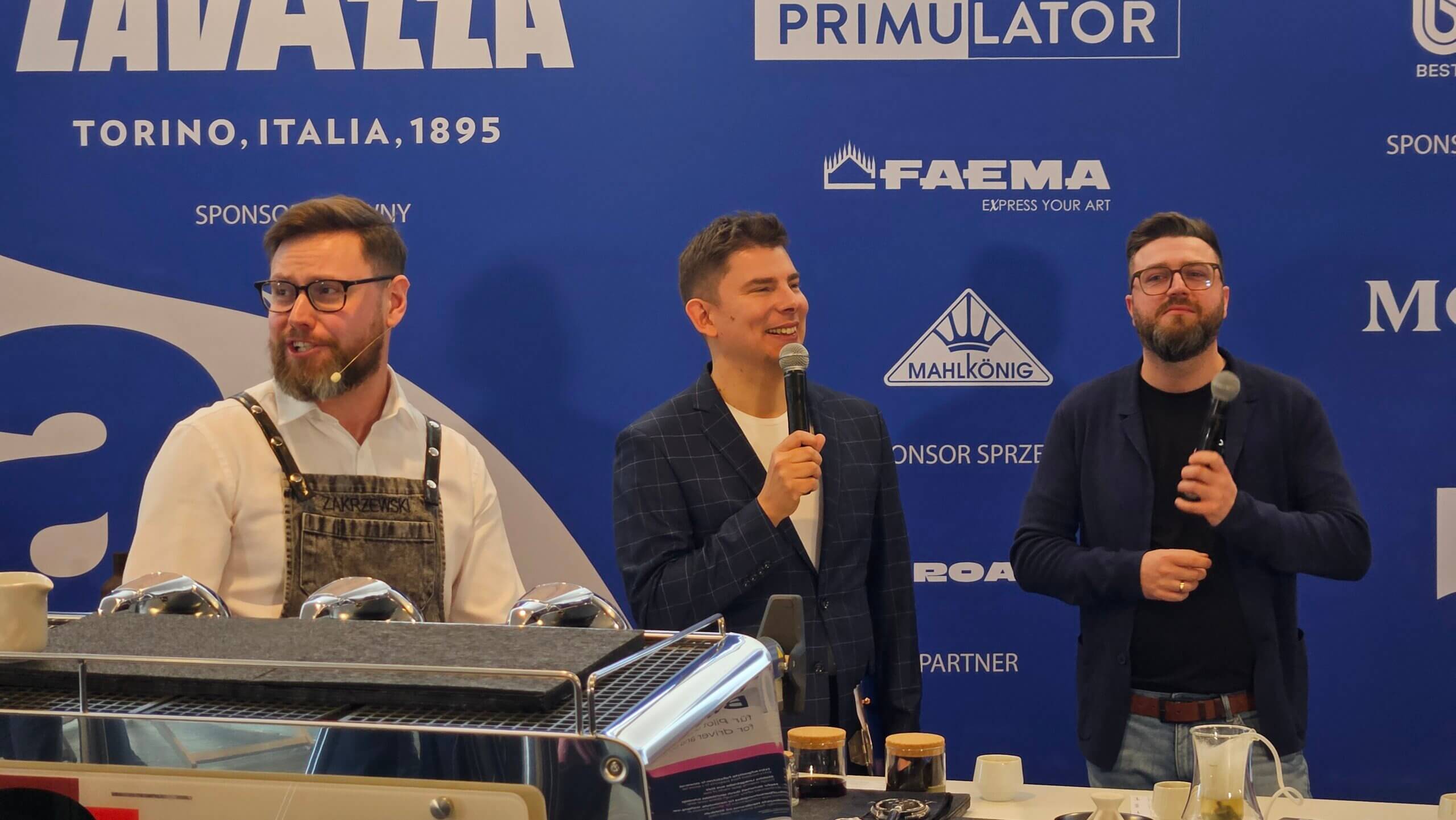
The Polish Barista Championship 2025 asked competitors for a classic espresso, milk drinks and a signature coffee creation, judged on technique and imagination in equal measure. Daria Figaszewska took the title, standing out through how well she handled her brewing parameters, with Michał Ciupiński and Kamila Adamiec behind her.
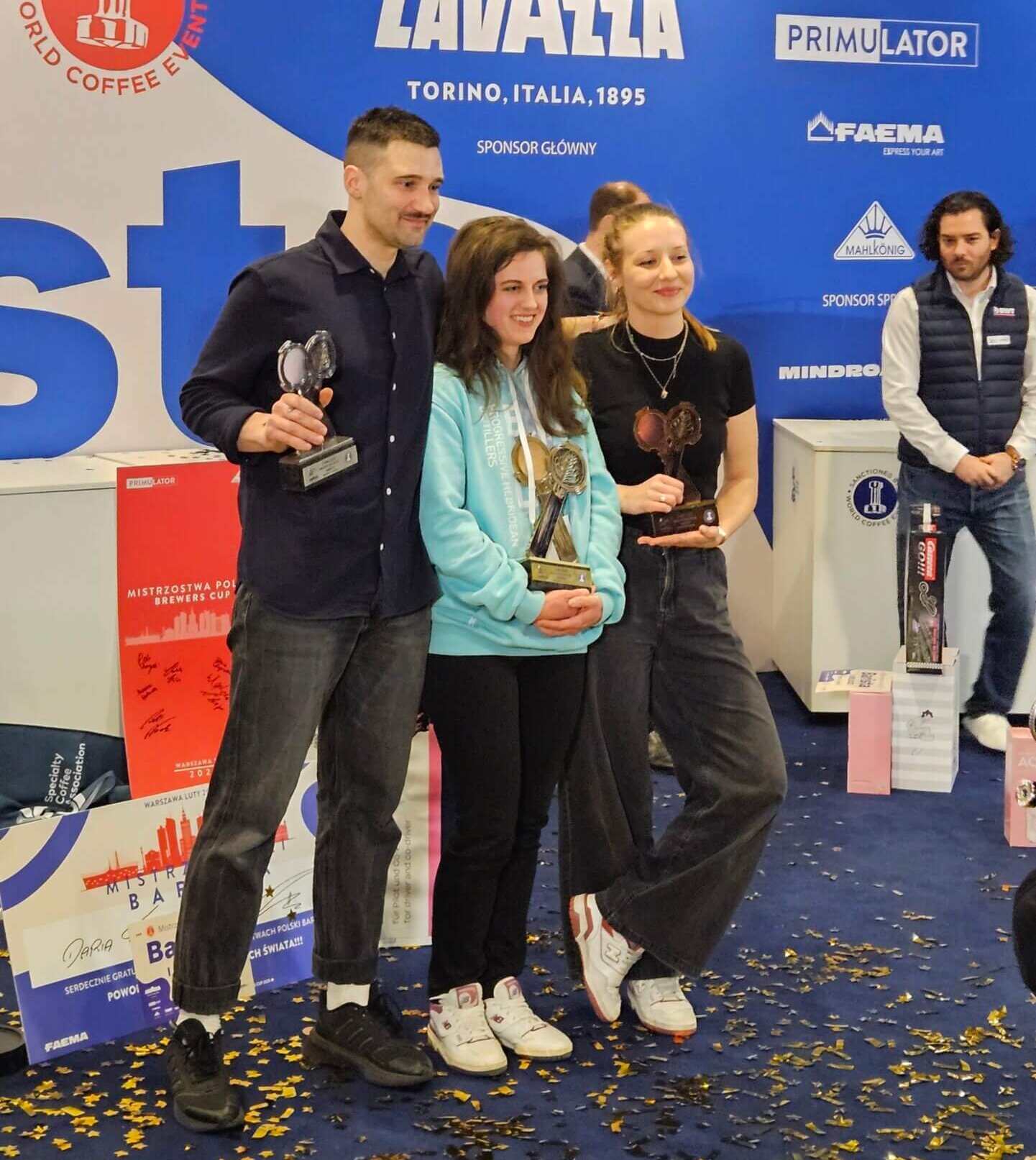
The Brewers Cup 2025 is about filter methods: pour-over, Chemex, AeroPress. Competitors had to find the balance between precise extraction and getting the full range of aroma out of the coffee. Piotr Nowak came out on top, with Wojciech Filip and Piotr Skarżyński next. The round asks for more than accurate brewing, too: you have to be able to tell the story of the coffee, from where it grew through how it was roasted to what ends up in the cup.
The talks and workshops
Education was one of the pillars of the Warsaw festival, and it gave people both knowledge and a reason to go home and experiment. The main stage ran talks from recognised specialists on current trends and technology in the trade.
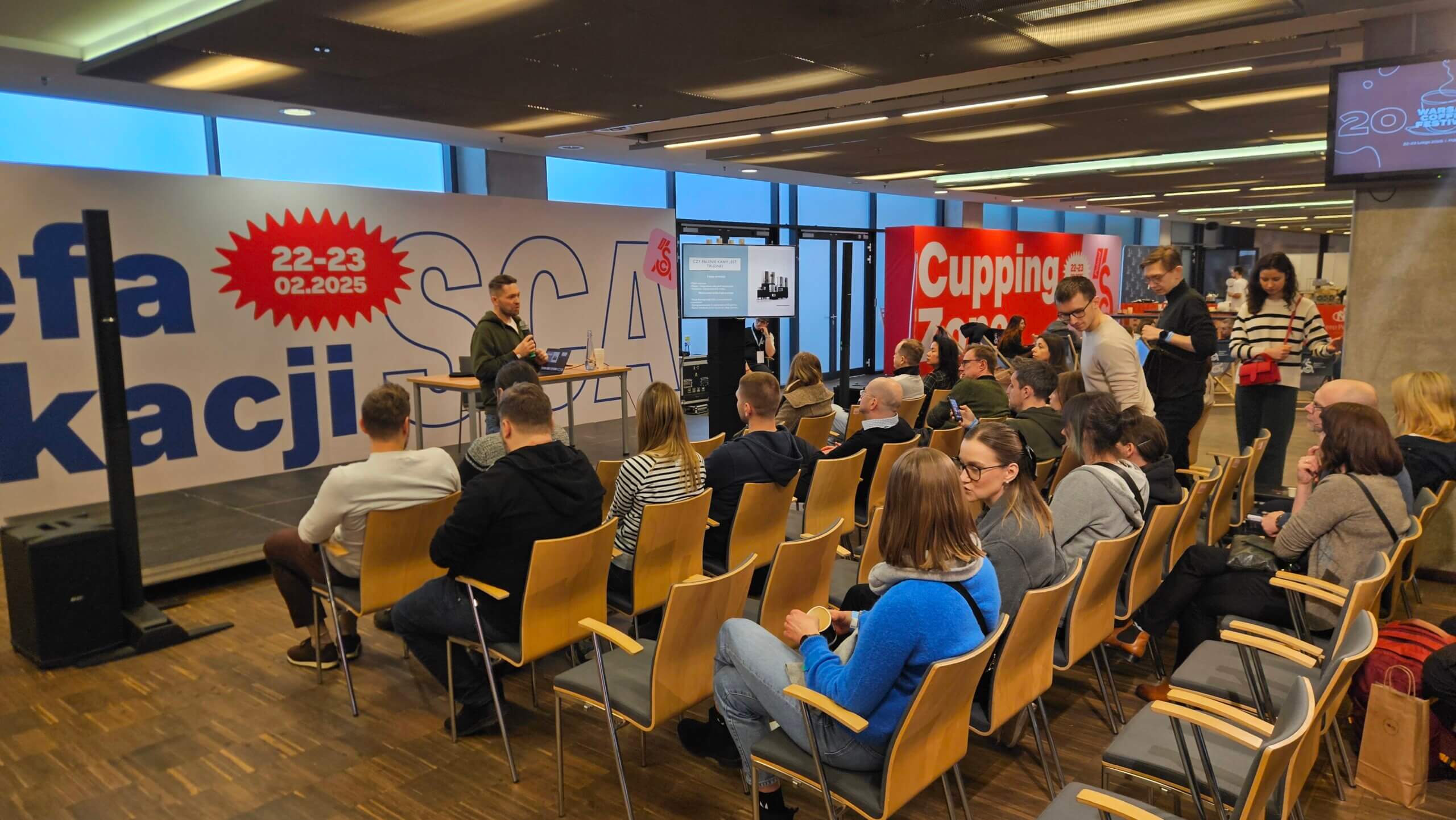
The strongest sessions covered the role of technology in roasting and the finer points of filtration, both of which decide how the finished cup tastes. Piotr Mróz of SCA Poland explained how the international organisation works, and Jacek Kotowski of LaCava talked through the challenge of growing a coffee brand in a fast-moving market. The speakers backed the theory up as they went: grind, extraction and the sensory result are all links in the same chain.
Alongside the stage, the workshop area ran hands-on sessions on tasting and aroma assessment. Fabiana Carvalho led one called “Deep into Taste Perception”, where people worked through the finer distinctions between coffee profiles and learned to name them. Other sessions covered newer methods of assessing green coffee quality and made the case for pairing traditional technique with modern analytical tools.
Being able to put questions to the speakers directly was worth as much as the sessions themselves. Talks, practical workshops and open discussion together made a space for swapping knowledge, and sent people home wanting to brew better coffee.
New brewing technology at the Warsaw festival
Warsaw Coffee Festival 2025 hosted the Polish launch of the Nuova Aurelia, a machine aimed at venues that want technology to hold the standard for them, including through high staff turnover. The claim is that it removes the need for continuous barista training, since operating it takes only basic skills. It works together with a grinder that doses a programmed amount of coffee, and each portafilter can be set individually, with grinder and machine talking to each other and passing the agreed parameters across. Using 15 g of coffee, for example, the extraction should take 30 seconds. The grinder adjusts the burrs by itself while the machine watches the shot and feeds back, so the setup converges on the right parameters. An approach like this could change how a lot of venues serve coffee.
Warsaw Coffee Festival 2025 in summary
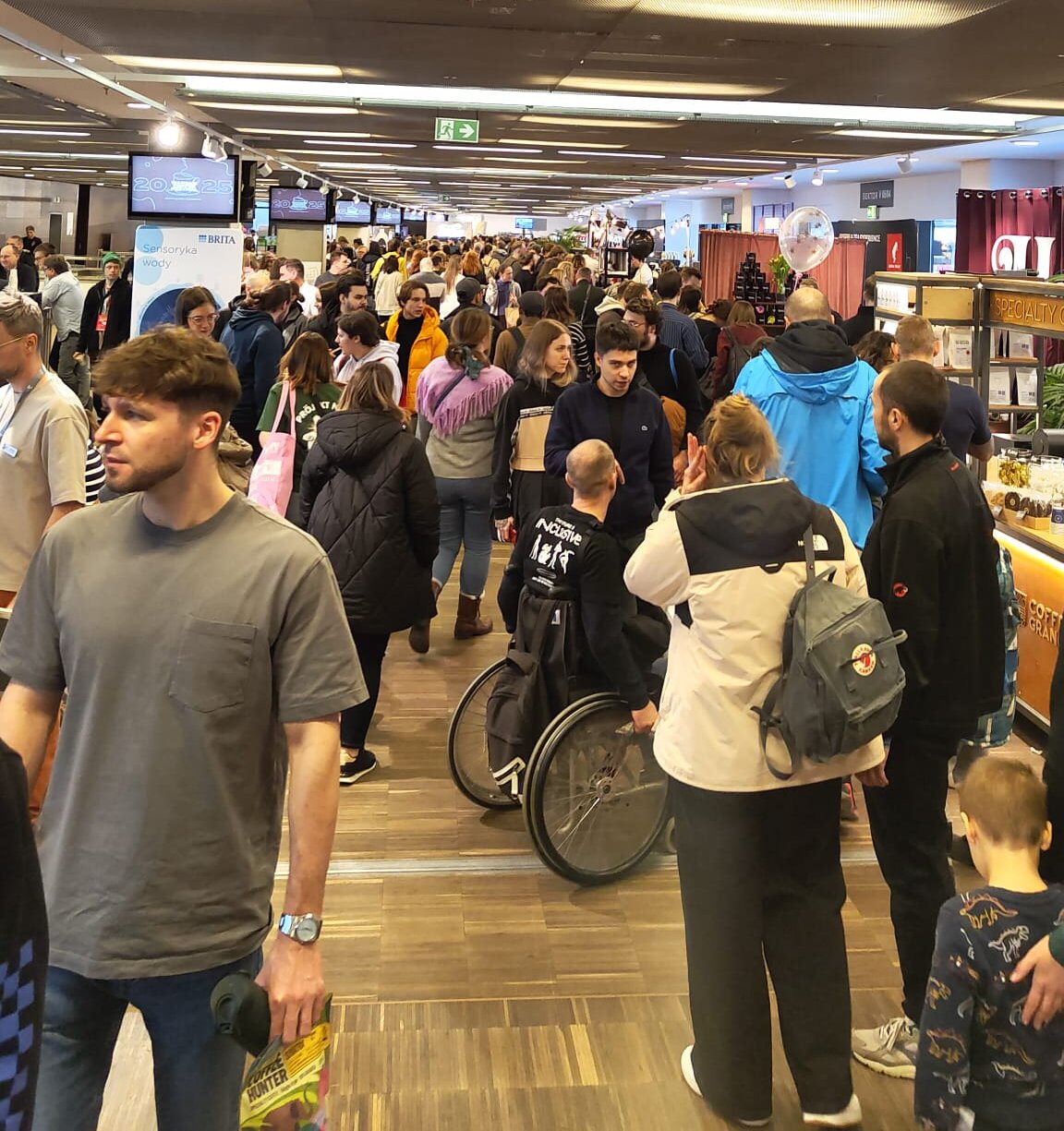
The festival gave us a chance to show where espresso is going, to meet people worth working with, and to watch the national barista competitions up close. Our debut in the capital is a step that matters, and it backs up how seriously we take both new technology and the craft of brewing. The festival worked as a meeting point between the traditional and the new, and it opens up room for us to grow.
