




Customers often ask where the name Colbergcoffee comes from and whether it’s a spelling mistake. It isn’t. Colberg is an old spelling of Kołobrzeg, found on historical maps, engravings and documents. The story of the name, from Colberg to Kołobrzeg, goes back centuries. When we started our coffee roastery in 2018, we wanted the name to show exactly where we come from.
The history of the city’s name goes back to the Middle Ages. It begins with a Slavic stronghold on the Parsęta River, in what is now Budzistowo. Later came the Hanseatic city of Kolberg and, eventually, modern-day Kołobrzeg. You can read about our roastery, our coffees and our daily work in the article Colberg, a coffee roastery in Kołobrzeg.

From Colberg to Kołobrzeg: where the city’s name comes from
The name Kołobrzeg has Slavic origins. According to one of the best-supported theories, it comes from words meaning stake and bank or shore, referring to the wooden fortifications of the early settlement. The chronicle of Thietmar of Merseburg, written in the early 11th century, contains the phrase Salsae Cholbergiensis aecclesiae, also given in simplified form as Salsa Cholbergiensis. It refers to the bishopric established in 1000, during the reign of Bolesław Chrobry. The reference to salt also reflects what Kołobrzeg was known for as early as the Middle Ages.
Over time, the Slavic name took several forms: Cholberg, Colberg and Kolberg. For several centuries, the city was part of the German-speaking world, so these spellings dominate historical records. The versions beginning with “C” and “K” were used alongside each other. Eventually, Kolberg became the established spelling and remained in use until 1945. Since then, the city’s official Polish name has been Kołobrzeg.
A brief history of Kołobrzeg
Kołobrzeg is one of the oldest towns on the Polish coast, with more than a thousand years of history. I’ve put the key events together in the table below.
| Period | What happened | Name in historical records |
|---|---|---|
| Early Middle Ages | A stronghold and settlement near the mouth of the Parsęta River, with salt production from local brine springs | Slavic forms |
| Year 1000 | Establishment of the Kołobrzeg bishopric, agreed at the Congress of Gniezno | Salsa Cholbergiensis |
| 13th century | Granting of town privileges, growth of the salt and fish trade | Cholberg, Colberg |
| 14th-16th centuries | Membership of the Hanseatic League, maritime trade | Colberg, Kolberg |
| 1807 | Defence of the city during a siege in the Napoleonic Wars | Kolberg |
| 19th century | Development as a spa town and seaside resort | Kolberg |
| 1945 | Heavy fighting and widespread destruction; Poland’s symbolic Wedding to the Sea ceremony on 18 March | Kołobrzeg |
| After 1945 | Reconstruction, with Kołobrzeg becoming one of the Baltic coast’s main seaside resorts | Kołobrzeg |
Salt, the Hanseatic League and the port: how old Colberg prospered
Salt was one of the main sources of wealth in historic Kołobrzeg. It was extracted from local brine springs as early as the Middle Ages, then sold inland and across the sea. Fishing and trade through the port at the mouth of the Parsęta River were also important. Membership of the Hanseatic League, an association of merchant towns, gave Kołobrzeg trading connections throughout the Baltic region.
You can still see traces of that history today. One of the city’s most important landmarks is the Basilica of the Assumption of the Blessed Virgin Mary, a Gothic church that was once a collegiate church and is now a co-cathedral. It was badly damaged during the fighting in 1945 and rebuilt after the war. Our café is just a short walk from the basilica. We see its distinctive outline from our windows every day.

From fortress to seaside spa town
For centuries, Kołobrzeg also served as a fortress. One of the most important events in its history was the defence of the city in 1807, during the Napoleonic Wars. In the 19th century, the fortress gradually lost its importance while the spa industry grew. Brine, therapeutic peat mud and the coastal climate attracted increasing numbers of visitors seeking spa treatments.
In 1945, heavy fighting destroyed much of Kołobrzeg. On 18 March 1945, Poland’s symbolic Wedding to the Sea ceremony took place here. After the war, the city was rebuilt and developed into one of the most popular resorts on the Baltic coast. If you’re visiting for the first time, take a look at our guide to things to do in Kołobrzeg.
From Colberg to Kołobrzeg: why we chose the name Colbergcoffee
The name combines two words: Colberg, the historic name of Kołobrzeg, and coffee. We founded the roastery in January 2018 as the Pilichowski family. From the beginning, we’ve built it together: Samuel, Zuzanna and Estera. Our first blend was Kołobrzeska, and it was this coffee that first attracted local interest in what we were doing.
We chose the spelling with a “C” because it’s older and less common today than Kolberg. But it has its drawbacks. People easily mix up the name, so you might come across variations such as Kolberg Kaffee, Cafe Kolberg or Colberg Kawiarnia. We’re sticking with Colbergcoffee.
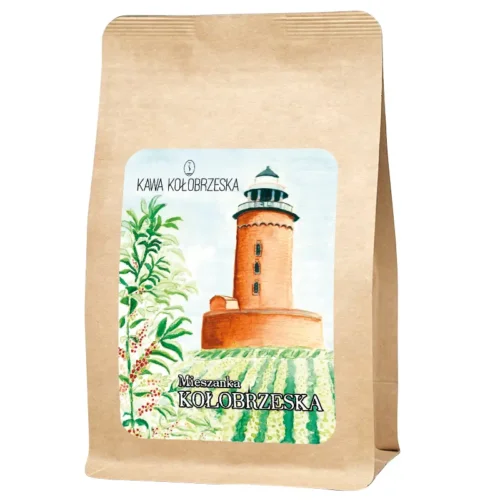
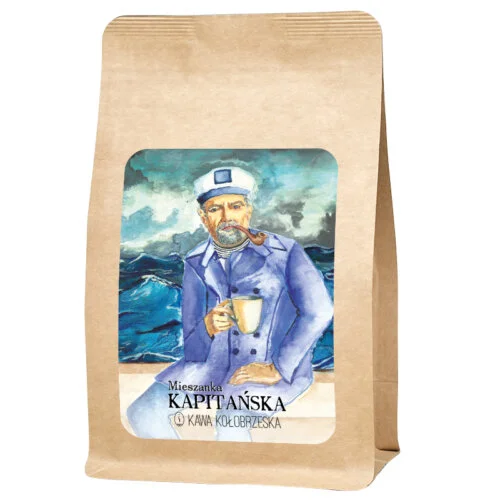
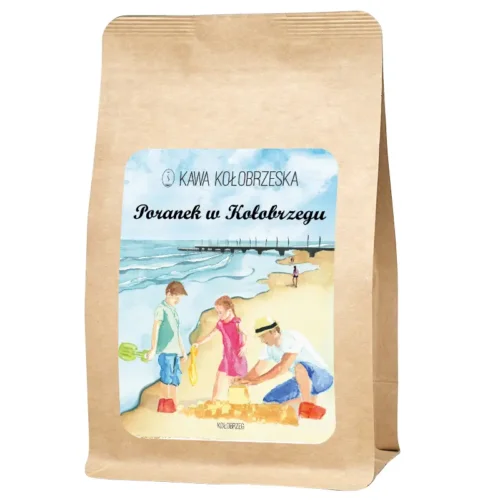
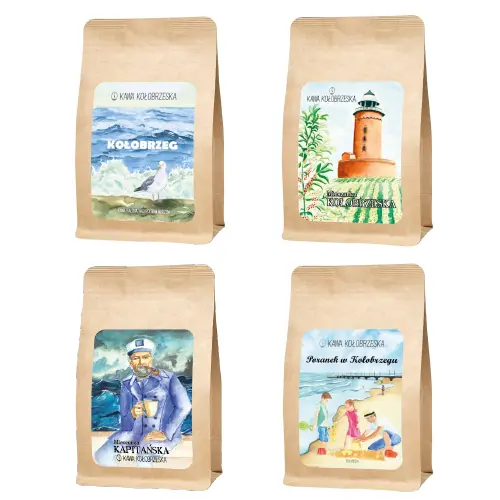
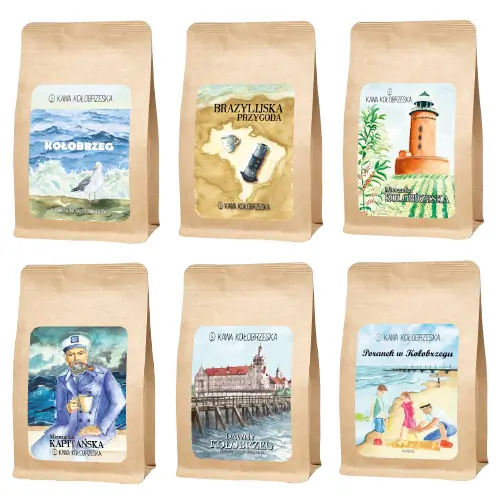
We also draw on the city’s history when naming our coffees. In our Kołobrzeska Kawa range, you’ll find blends such as Kołobrzeska, Kapitańska and Poranek w Kołobrzegu.

Colberg today: coffee roastery, café and shop
Today, Colbergcoffee is a coffee roastery, an online shop and a café in Kołobrzeg at 21A Dubois Street. Our range includes blends for espresso and moka pots, as well as single-origin coffees, including light roasts for filter brewing. We supply cafés, restaurants and hotels through our B2B partnerships. Our shop also offers coffee machines.
Freshness matters to us just as much as our name. We roast 2-4 times a week. We usually dispatch orders within 24 hours, and in 95% of cases, the coffee reaches the customer within a day.

Frequently asked questions about Colberg and the history of Kołobrzeg
What does the name Colberg mean?
Colberg is a historic spelling of Kołobrzeg, found in old documents and on maps alongside the form Kolberg. Both come from the city’s original Slavic name.
What’s the difference between Colberg and Kolberg?
They’re two spellings of the same name. The version beginning with “C” appears in older sources, while Kolberg eventually became the standard spelling and remained in use until 1945.
Where does the name Kołobrzeg come from?
The name has Slavic roots. According to one of the best-supported theories, it comes from words meaning stake and bank or shore. It may have referred to the wooden fortifications of the original settlement.
How old is the city of Kołobrzeg?
Its history goes back to the early Middle Ages. The original stronghold stood on the Parsęta River, in what is now Budzistowo. The Kołobrzeg bishopric was established in 1000, and in 1255 the town received Lübeck town rights.
Why is the coffee roastery called Colbergcoffee?
We combined the city’s historic name, Colberg, with the English word coffee. We wanted to show that we’re a coffee roastery from Kołobrzeg and that this is where our brand comes from.
When was Colbergcoffee founded?
In January 2018. It was founded by the Pilichowski family, and its first coffee blend was Kołobrzeska.
Where can I drink Colbergcoffee in Kołobrzeg?
At our café at 21A Dubois Street, just a short walk from the Basilica of the Assumption of the Blessed Virgin Mary. You can buy our coffee beans in the café or through our online shop.
Przeczytaj też
Caffè latte: what it is, ratios and recipe
Caffè latte step by step: espresso to milk ratios, steaming milk on an espresso machine
Nov
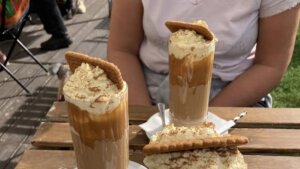
Viennese coffee: recipe, Einspänner and Wiener Melange
Viennese coffee step by step: which cream to use, how to whip it so it
Nov
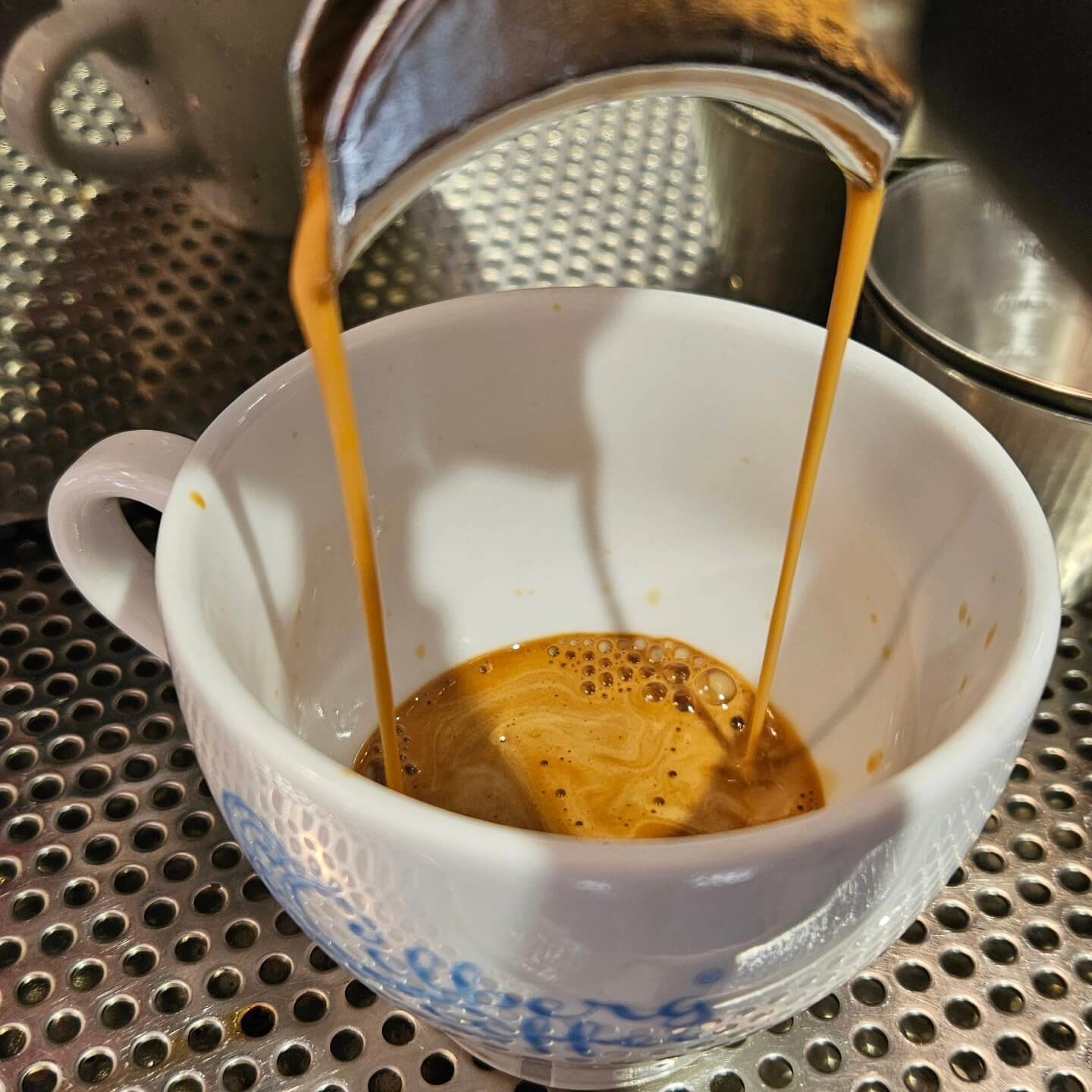
Coffee with lemon (espresso romano): recipe and facts
Coffee with lemon step by step: espresso romano with lemon peel, iced versions, mazagran and
Nov
Bulletproof coffee: recipe, calories and what research says
Bulletproof coffee: a recipe with exact amounts, calories, butter vs ghee, MCT oil and how
Nov
Frappe: how to make Greek iced coffee
Greek frappe step by step: ratios, sketos, metrios and glykos, shaking technique and mistakes that
Nov
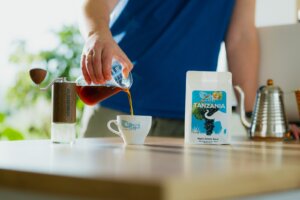
How to make filter coffee: ratio, grind size and temperature
How to make filter coffee: how much coffee per litre of water, how to grind,
Oct
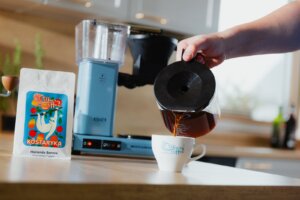
Coffee on an empty stomach: is it bad for you? What the research says
Is coffee on an empty stomach bad for you? What research says about stomach acid,
Oct
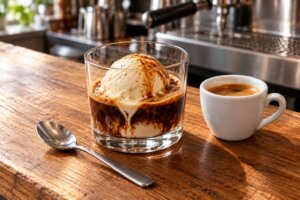
Affogato: what it is and how to make one
An affogato is an Italian dessert: a scoop of vanilla ice cream drowned in hot
Oct

This site is protected by reCAPTCHA. The Google Privacy Policy and Terms of Service apply.