














Once people find a blend they like, they usually want to buy it again and enjoy a similar flavour. This presents a challenge for roasters because green coffee changes throughout the year and some lots become unavailable. Blending helps maintain a consistent flavour profile and combine the characteristics of different beans in a way that no single coffee can achieve. When developing a blend, you need to decide whether to combine the beans before or after roasting. I draw on Scott Rao’s 2014 book The Coffee Roaster’s Companion. At the end, I’ll explain what goes into our own blends.
In this article, you’ll learn:
- how blending green beans differs from blending roasted coffees,
- how to test blend ratios using separate brews and an ordinary spoon,
- what goes into the blends from our roastery.
What is a coffee blend and why make one?
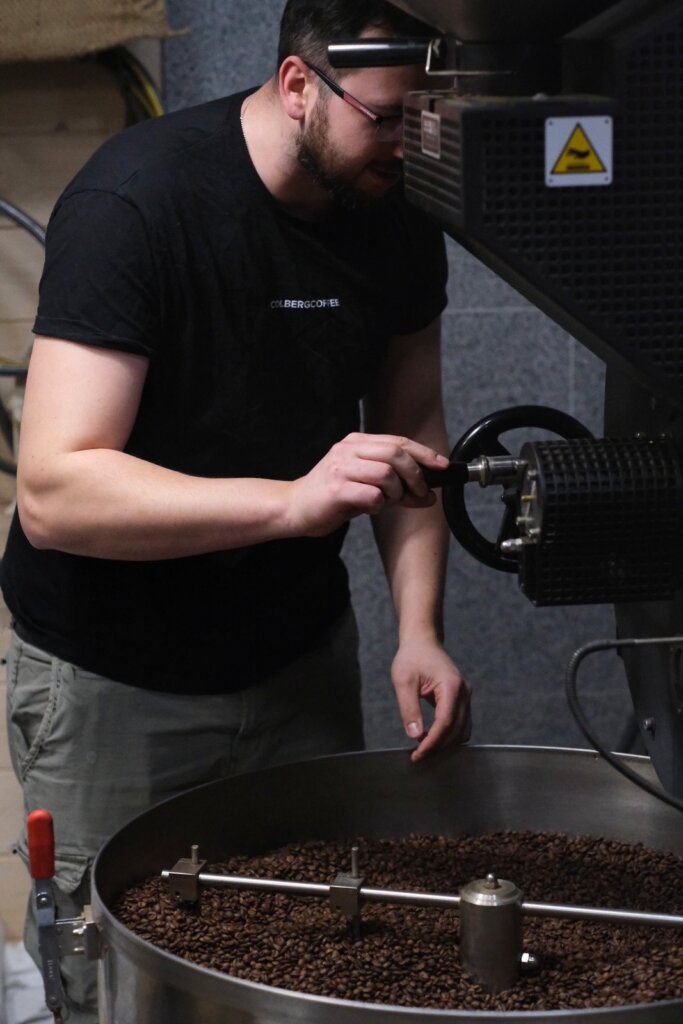
A blend combines several coffees selected to produce a flavour that differs from that of each coffee on its own. Blends also help maintain consistency. Green beans change throughout the year, and individual lots are available in limited quantities. By adjusting the composition of a blend, roasters can maintain a similar flavour profile even when they need to switch to a different lot.
Being able to adjust a blend is also useful when supplies of a particular coffee run out or its price increases. Customers can continue buying a blend under a familiar name and expect a similar flavour. Blends used to be the standard, but single-origin coffees are also becoming increasingly popular, allowing drinkers to explore the distinctive character of an individual origin.
Should you blend coffee before or after roasting?
Pre-blending involves combining green beans and roasting them together. With post-blending, each coffee is roasted separately before the roasted beans are combined in specific proportions. Both methods can produce excellent results when used correctly. Rao prefers blending after roasting and determining the ratios through tasting, but emphasises that this is a personal preference rather than a general rule.
| Before roasting | After roasting | |
|---|---|---|
| What is blended | green beans | individually roasted coffees |
| How to blend | combine the coffees a few days before roasting | determine the ratios by tasting combinations of separately brewed coffees |
| Coffee selection | very similar bean size and density, same processing method | blend composition determined through tasting |
Blending green beans: three key requirements
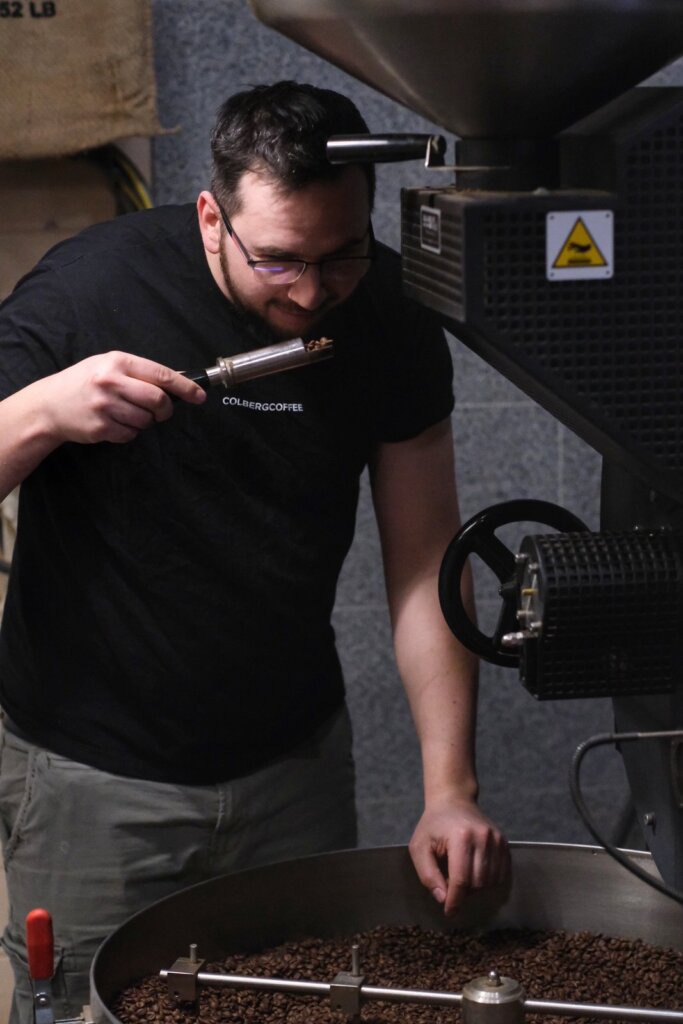
Blending coffees before roasting means working with a single batch and a single roast profile, which reduces the workload. However, not all beans are suitable for roasting together. It is best to select coffees with very similar bean sizes and densities that have undergone the same processing method, such as washed or natural. This makes the roast easier to manage because beans with different characteristics respond differently to heat. It is also worth combining the green coffees a few days before roasting to allow their moisture content to equalise.
How to test blend ratios: the spoon method
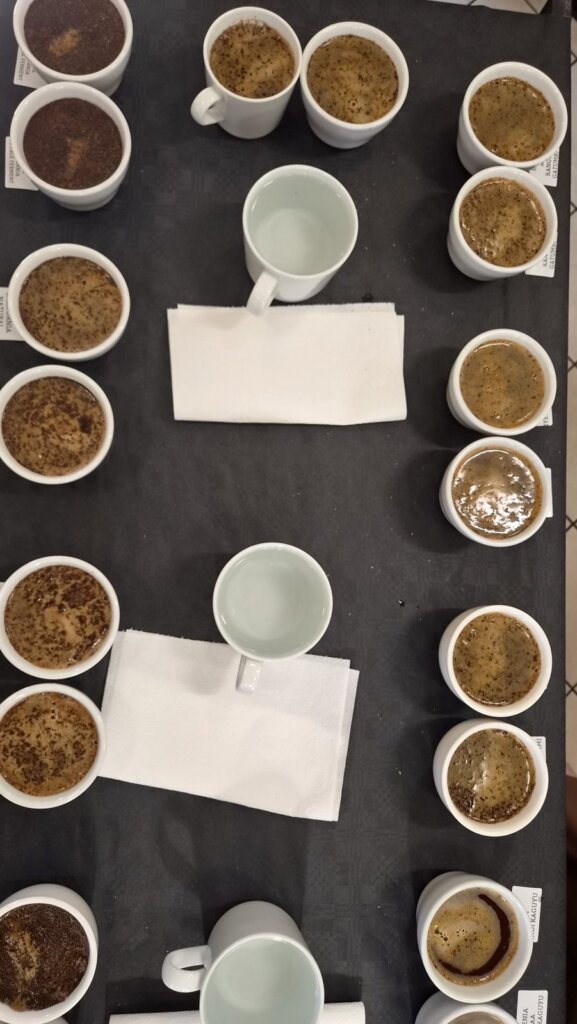
When blending after roasting, you can test different ratios before combining the roasted beans. Brew each component separately, then use a spoon to combine the brews in different proportions and compare their flavours.
- Set up a cupping session for all the components. Relatively large samples are useful for testing, for example, 20 g of ground coffee to 320 g of water for each brew.
- Combine the brews in an empty cup. To test a blend of three equal parts, add 1 spoonful of each brew.
- For a 50/25/25 ratio, add 2 spoonfuls of the first brew and 1 spoonful of each of the other two.
- Taste the combined brews, adjust the ratios and taste again. Repeat the process until you find a flavour you like.
- Once you have settled on the proportions, blend the beans and brew the finished blend using your usual brewing method. Compare the result with what you achieved during cupping.
This method was developed for use in coffee roasteries, but you can also try it at home. All you need is the coffee you already have and a few separate brews. You can learn more about the tasting process in our article coffee cupping: how a roastery evaluates coffee.
Why fixed blend ratios are not enough
An established blend recipe does not guarantee identical flavours from every roast. Successive roasts can vary, green beans change throughout the year and each new harvest may differ from the previous one. Ratios that worked well in spring may therefore need adjusting in autumn. It is better to let tasting guide your decisions than to stick rigidly to percentages. Even then, absolute flavour consistency is impossible to achieve.
How many coffees should a blend contain?
There is no single correct number of components. The three coffees in the spoon method example are simply there to demonstrate how to test a blend. The book does not prescribe specific roles for individual components, such as “a chocolatey base coffee plus another coffee for acidity”, or universal ratios for combinations such as Brazilian and Colombian coffees or arabica and robusta. The final composition should be determined through tasting.
Are blends a way to reduce coffee costs?
Critics point out that blends can be used to reduce the cost of green coffee or mislead customers. Rao cites the example of the “Kona blend” label, which, according to his 2014 account, could legally be used on a blend containing as little as 10% Kona beans. However, he does not specify which law the example refers to, so it should not be taken as a guide to current regulations. This does not mean that every blend conceals something from the customer. It is worth checking the composition of a blend before buying it.
Coffee blends for espresso and milk-based drinks
Roasters often roast espresso blends darker than their other coffees because most espresso is used in milk-based drinks. In a cappuccino or latte, many light-roasted coffees can taste too subtle when combined with milk or have an overly pronounced acidity. A darker roast can work well in these circumstances, but it is not essential. According to Rao, there is no need to adopt a separate set of roasting principles for espresso. As with other brewing methods, the aim is to achieve the right balance of sweetness and acidity while maximising roast development.
If you drink espresso without milk, a well-developed coffee can be roasted to the same or almost the same degree as coffee intended for pour-over brewing. Proper extraction is also essential. Roasting darker as a precaution will not solve every problem with sourness. The cause may be insufficient roast development or under-extraction. If you drink coffee with milk, you may also want to read our article on the best coffees for milk-based drinks.
What goes into the blends from our roastery?
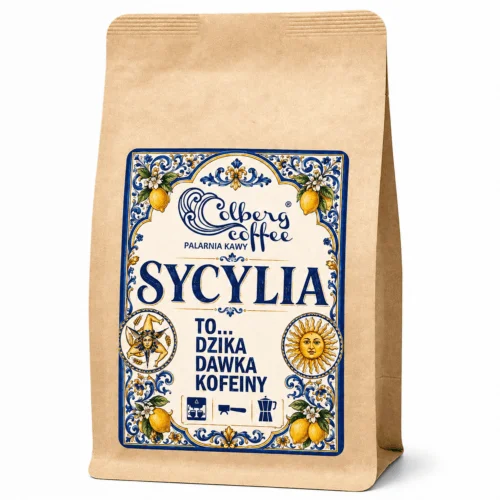
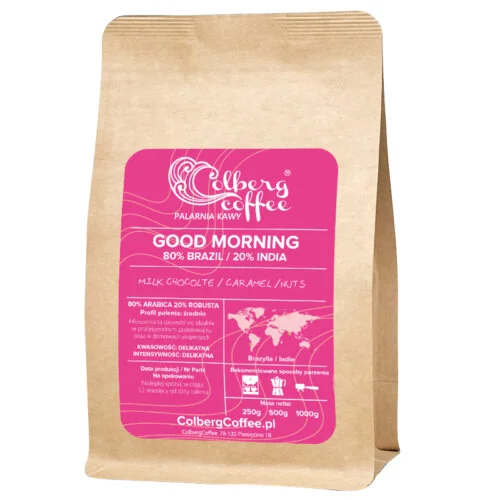
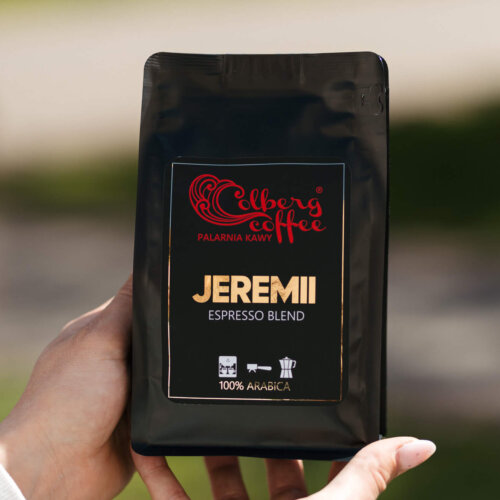
Each of our blends serves a different purpose, so their compositions vary. Sicily Espresso 50/50 contains equal parts Brazilian arabica and Indian robusta. Good Morning also combines coffees from Brazil and India. Jeremii Blend consists of 100% arabica from Brazil, Honduras and Ethiopia, while Sweet Breeze combines coffees from Brazil and Colombia.
We also develop blends for individual businesses. One example is the blend we created for Ceglana café in Koszalin. We developed it in collaboration with the café and refined it through trial and error. If you run a café or restaurant and are looking for your own blend, you can find more details on our B2B partnership page. To learn what happens to coffee beans inside the roaster, read our article on coffee roasting.
Key takeaways
- Blending makes it possible to achieve a flavour that none of the individual coffees can produce on its own and helps maintain a similar flavour profile throughout the year.
- Coffee can be blended before or after roasting. When blending green beans, it is best to select coffees with very similar bean sizes and densities that have undergone the same processing method.
- Blend ratios should be assessed through tasting and adjusted as necessary because green coffee and successive roasts vary throughout the year.
What is a coffee blend?
A blend is a mixture of several coffees. Roasters combine beans to achieve a flavour that no individual component can produce on its own and to maintain a similar flavour profile throughout the year.
Is coffee blended before or after roasting?
Both methods are used. You can combine green beans and roast them together or roast the individual components separately before blending them. Both methods can produce excellent results. Scott Rao personally prefers blending after roasting.
Which coffees can be blended before roasting?
When roasting coffees together, it is best to select beans of very similar size and density that have undergone the same processing method, such as washed or natural.
How do you test coffee blend ratios?
Brew each component separately, using, for example, 20 g of ground coffee to 320 g of water for each brew. Then use a spoon to combine the brews in a cup in different proportions and compare their flavours. Finally, blend the beans and brew them using your usual brewing method.
How many coffees should a blend contain?
There is no single correct number of components. The three coffees in the spoon method example are simply there to demonstrate the technique. The number of components and their proportions are determined by taste.
Is a coffee blend inferior to a single-origin coffee?
No. Advocates of coffee blends emphasise flavour consistency, while critics point out that blending can be a way to reduce costs. In our view, quality depends on the individual blend, not on the term itself.
Przeczytaj też
Kopi Luwak: The Coffee from Droppings I Don’t Recommend
Kopi Luwak costs a fortune, yet its supposedly exceptional quality remains questionable. Behind this famous
Nov
Paper, Metal or Cloth Coffee Filters: Which to Choose?
Paper retains most coffee oils and fine particles, metal lets more of them through, and
Nov

Christmas Coffee Recipes: 5 Ideas from a Barista
Five Christmas coffee recipes you can make at home, including drinks from our café's winter
Nov

Cyber Monday 2026: When Is It and How to Stock Up on Coffee
Cyber Monday 2026 falls on 30 November. Find out how it started, what we have
Nov
Jamaica Blue Mountain Coffee: Is the Legend Worth the Price?
For years, Jamaica Blue Mountain was regarded as one of the world's finest coffees, and
Nov
How much water do coffee grounds retain? Where does it go?
From 350 g of water, you get around 302 g of brewed coffee. We explain
Nov
V60 Pouring Height: What Does Physics Say?
Does pouring from higher up always improve coffee agitation? Physics shows that there is a
Nov

Why Does Coffee Taste Different as It Cools?
Coffee left on your desk can taste completely different from how it tasted just after
Nov

This site is protected by reCAPTCHA. The Google Privacy Policy and Terms of Service apply.