





The Hario V60 is a cone-shaped dripper that lets you brew coffee by hand, pouring hot water over ground coffee in a paper filter. It’s affordable, takes up little space and gives you control over every stage of brewing. This Hario V60 brew guide will help you make a clean, clear cup at home and discover more of what your coffee has to offer.
Below you’ll find a V60 recipe, coffee-to-water ratios in grams, grind settings, water temperature and tips on what to adjust if your coffee tastes too sour or too bitter. I’ll also help you choose the right dripper size and material.
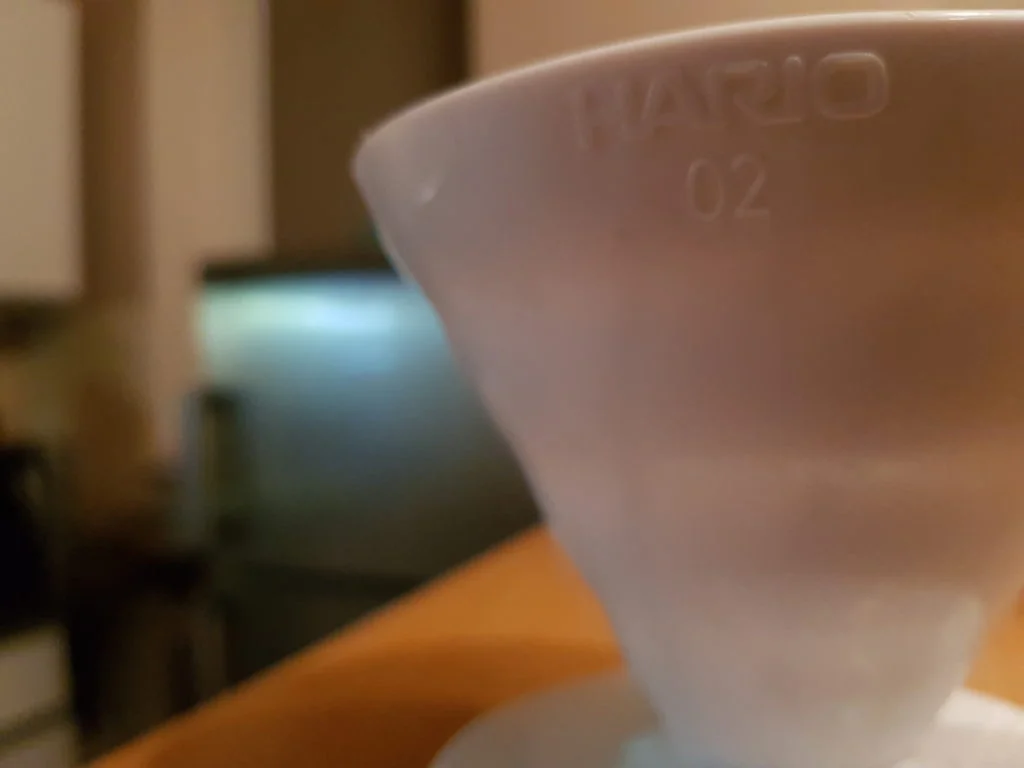
What is a Hario V60 dripper?
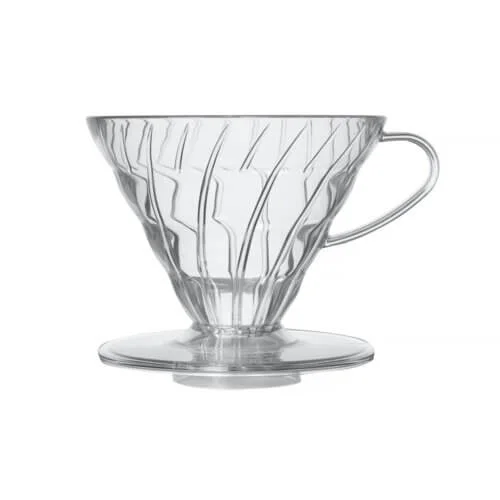
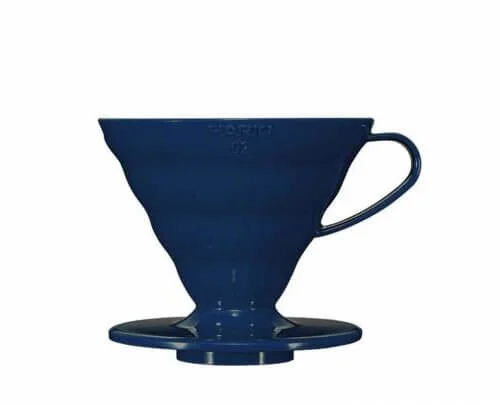
The V60 is made by Hario, a Japanese company that started out producing heat-resistant glass. Its name comes from the 60-degree angle of the cone. Three design features affect how the coffee brews.
One large hole at the bottom. The flow rate depends mainly on grind size, the filter and how you pour the water. This gives you plenty of control, but it can also make the V60 more demanding for beginners than a flat-bottom dripper.
Spiral ribs along the walls. These keep the filter slightly away from the dripper, leaving space for air to escape. This helps water flow more freely through the coffee.
A cone-shaped filter. The coffee forms a deeper bed than it does in a flat-bottom dripper. The paper traps some oils and fine particles, so the brew is usually clearer and has a lighter body than coffee made in a French press or moka pot.
The V60 is a pour-over brewing method, much like the Chemex or Kalita Wave. We explain the basics in our guide to pour-over coffee and how to brew it. Here, we’ll focus on the V60 itself.
What you need to brew with a Hario V60
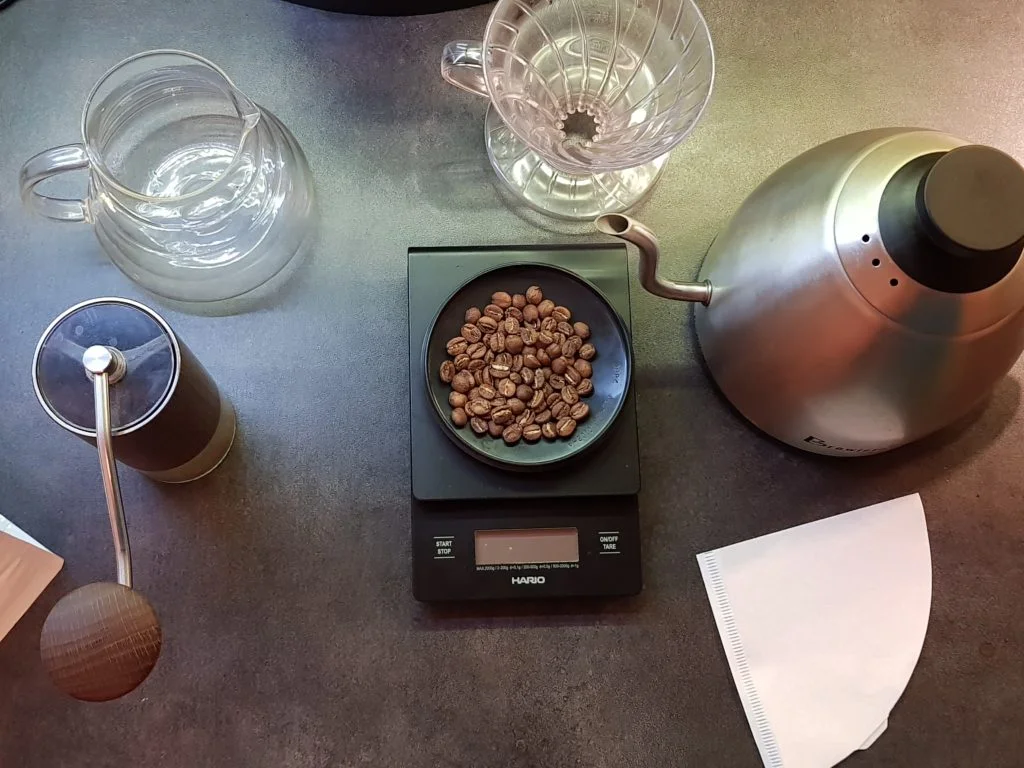
To get started, all you really need is a dripper, filters, coffee and a kettle. If you want consistent results, a scale and a burr grinder are worth having too.
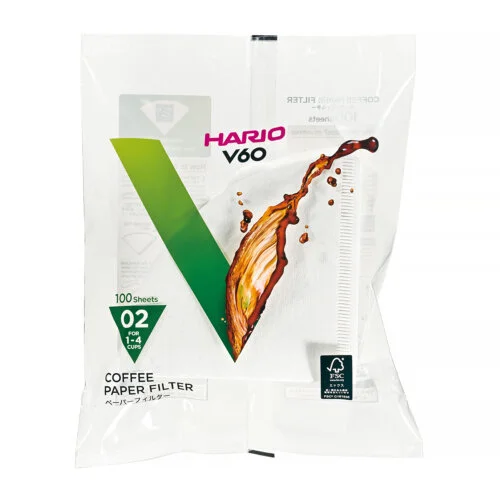
- V60 dripper in size 02 and paper filters that fit this size.
- Whole bean coffee with a light roast, around 15-18 g for one large cup.
- Burr grinder. A blade grinder produces a mix of fine powder and large coffee particles, making even extraction difficult. For home brewing, manual coffee grinders work well.
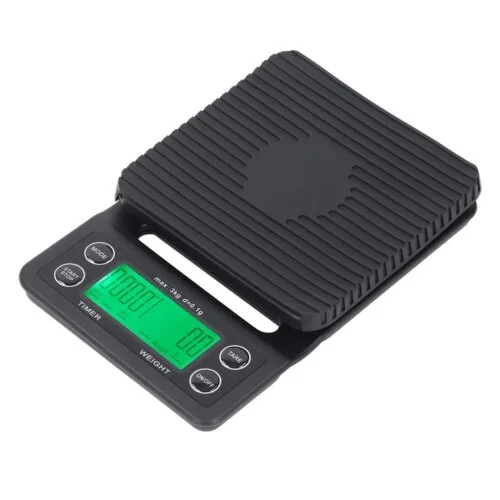
- Scale with a timer. Measuring coffee with a spoon can lead to differences of several grams. A scale lets you measure your coffee and water accurately and keep track of brewing time.
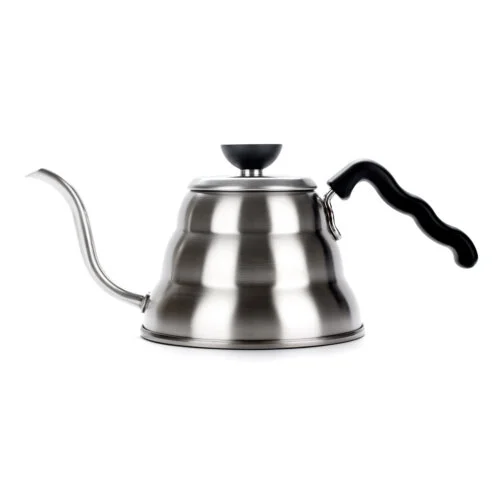
- Gooseneck kettle. You can brew with a regular kettle, but controlling the water flow and where it lands will be harder.
- Server or mug to place the dripper on.
Hario V60 coffee-to-water ratio
Start with 60-65 g of coffee per litre of water, roughly a 1:16 ratio. It’s a good starting point that you can adjust to suit your taste. Here are a few examples:
- 15 g of coffee and 250 g of water for a smaller cup.
- 18 g of coffee and 300 g of water for a large mug. This is a good everyday brewing recipe.
- 30 g of coffee and 500 g of water for two people, using a size 02 dripper.
It’s better to weigh your water than measure it with a jug. Roughly speaking, 1 g of water equals 1 ml, so the scale shows you exactly how much you’ve poured. If your coffee tastes too weak, you can increase the dose by 1-2 g. For more examples, see our guide to choosing the right coffee-to-water ratio.
Hario V60 brew guide: step by step
We’ll use 18 g of coffee and 300 g of water. The whole brew should take around 2:30-3:30 minutes. Treat this as a starting point and adjust it to suit your coffee.
- Boil the water. For light-roasted coffee, start with a water temperature of 92-96°C.
- Grind 18 g of coffee to a medium grind, roughly the size of table salt.
- Place the filter in the dripper and rinse it thoroughly with hot water. This removes any potential papery taste and warms the brewing equipment. Discard the rinse water.
- Add the ground coffee. Gently shake the dripper to level the coffee bed.
- Start with a bloom. Pour in around 40-50 g of water, making sure all the coffee gets wet. Wait 30-40 seconds. Freshly roasted coffee releases carbon dioxide at this stage and may visibly expand.
- Pour the water slowly in small circular movements. Start in the centre and avoid pouring directly onto the paper. Aim to reach 150 g at around 1:15. Then continue adding water, keeping the water level as steady as possible, until the scale reads 300 g.
- After the final pour, gently swirl the dripper to level the coffee bed. Wait for the water to drain through the filter.
- Aim to finish brewing at around 3:30. If the water takes significantly longer to drain, you can remove the dripper from the server. Next time, try a coarser grind.
After brewing, you’ll often see a fairly flat bed of coffee grounds in the filter. A deep crater or lots of grounds stuck high up on the walls may suggest uneven pouring. But the appearance of the coffee bed alone doesn’t tell you whether the brew is good. Taste matters most.
Hario V60 grind size and water temperature
Grind size is one of the most important variables when brewing with a V60. It affects how easily water flows through the coffee and how quickly extraction happens. Change one variable at a time. That makes it easier to tell what actually improved the flavour.
| What you taste | Brew time | What to change |
|---|---|---|
| Sour, watery, weak | Under 2:30 | Grind finer or increase the water temperature |
| Bitter, astringent, dry on the tongue | Over 3:30 | Grind coarser or lower the temperature by 2-3°C |
| Both sour and bitter | Any | Check your grinder and how evenly you pour, excess fines are often the cause |
| Tastes good but too weak | 2:30-3:30 | Add 1-2 g of coffee without changing the grind size |
Lighter roasts often benefit from higher water temperatures and sometimes a finer grind than darker roasts. But this isn’t a fixed rule. We cover grinder settings in our guide to grinding coffee for different brewing methods. Pay attention to your water too. High alkalinity can mute the perceived acidity and fruity notes of light-roasted coffee. We explain more in our article on the best water for pour-over coffee.
Which V60 size and material should you choose?
The V60 comes in three sizes. Size 01 is generally suitable for 1-2 cups, 02 for 1-4 cups and 03 for 1-6 cups. For home brewing, I usually recommend size 02. You can make a cup for yourself or brew a larger batch to share. Just make sure you buy filters that match your dripper size.
The material of your dripper affects durability, heat retention and everyday convenience. Plastic conducts heat poorly, so it usually doesn’t need much preheating. Ceramic takes longer to warm up. Metal draws heat from the water quickly, but it also heats up quickly itself.
| Material | Pros | Cons |
|---|---|---|
| Plastic | Cheapest, won’t shatter, loses little heat, so it doesn’t need much preheating | Can get scratched over time |
| Ceramic | Stable temperature once preheated, attractive appearance | Needs thorough preheating, can chip |
| Glass | Lets you see what’s happening inside, easy to clean | Breaks easily |
| Metal | Durable | Most expensive, loses heat quickly |
In my opinion, the plastic V60 offers the best balance of price and convenience. It’s lightweight, affordable and works well for everyday brewing. It’s the one I’d recommend starting with. You can find the other versions in our coffee drippers category.
What coffee works best in a V60?
The V60 is great at bringing out the character of light-roasted coffees from Ethiopia, Kenya, Rwanda and Burundi. The paper filter traps some oils and fine particles, making it easier to pick up fruity and floral notes along with the coffee’s natural sweetness. These flavours can be harder to notice in an intense espresso. You’ll find our recommendations in the coffee for V60 and pour-over brewing category.
Medium-roasted coffees from Brazil or Colombia also work well in a V60. They’re a good choice if you enjoy chocolate and nutty notes. Try a slightly coarser grind and water at around 90-92°C. I generally don’t recommend dark-roasted blends for the V60 because bitterness and roasted flavours can dominate the cup. If you want to try one, start with a lower water temperature and adjust the grind.
Freshness matters too. Whole bean coffee often tastes best within a few weeks of roasting, although some coffees need a longer resting period. The ideal timing depends on the beans and roast level. Once ground, coffee quickly loses some of its volatile aromas, even within a matter of minutes. That’s why it’s best to grind your beans just before brewing.
Common mistakes when brewing with a V60
- Using the wrong grind size. Pre-ground supermarket coffee may be too fine for a V60. Water then flows through slowly, and the coffee can taste bitter or astringent.
- Pouring water directly onto the paper filter. Some water may bypass the coffee bed, leading to less even extraction and a weaker brew.
- Skipping the bloom. Fresh coffee releases carbon dioxide when it comes into contact with water. The initial pour helps wet the grounds evenly and gives you better control over the rest of the extraction.
- Using water that’s too hot for dark-roasted coffee. This can bring out too much bitterness and roasted flavour. Try a lower temperature and see how it tastes.
- Changing several variables at once. If you adjust grind size, temperature and dose at the same time, it’s hard to know which change helped. Change one thing at a time and keep notes on the results.
Want to compare the V60 with a flat-bottom dripper? Check out my Kalita Wave recipe. If you plan to brew larger batches for guests, the Chemex is another good option.
Hario V60 brewing video
The video shows the whole process, from rinsing the paper filter to the finished cup of coffee.
Frequently asked questions about V60 brewing
How much coffee should I use for 300 ml of water in a V60?
Start with 18 g of coffee. That’s close to a 1:16 ratio, or 60 g of coffee per litre of water. If the brew tastes too weak, try adding 1-2 g more coffee. If it’s too strong, reduce the dose slightly. It’s best to measure the water using a scale.
How fine should I grind coffee for a V60?
Start with a medium grind, roughly the size of table salt. With 18 g of coffee and 300 g of water, aim for a total brew time of around 2:30-3:30. If the water flows through too quickly, try grinding finer. If it drains very slowly, go coarser. Remember that your pouring technique also affects brew time.
What water temperature should I use for a V60?
For light-roasted coffee, start at 92-96°C. For medium roasts, try around 90-94°C. If you don’t have a thermometer, you can boil the water and wait roughly half a minute for a light roast or a minute for a darker roast. This isn’t a precise method, though. The temperature depends on your kettle and how much water it contains.
Why should I rinse the paper filter before brewing?
Rinsing removes any potential papery taste and warms the brewing equipment. This is especially important with a ceramic dripper, which can absorb quite a lot of heat at first. Pour away the rinse water before adding the coffee.
What’s the difference between V60 sizes 01, 02 and 03?
The main difference is size. The 01 is suitable for 1-2 cups, the 02 for 1-4 cups and the 03 for 1-6 cups. For home use, I usually recommend the 02. It’s versatile enough to brew a single serving or coffee for several people. Make sure your paper filters match the dripper size.
Why does my V60 coffee taste sour?
Noticeable acidity can come from the coffee beans themselves or from underextraction. If your coffee tastes unpleasantly sour and lacks sweetness, try grinding finer or using hotter water. Check the brew time too. If you simply don’t enjoy fruity acidity, choose a medium-roasted coffee with a chocolatey profile, such as one from Brazil.
Can I use store-bought ground coffee in a V60?
Yes, but the results depend on grind size and freshness. Pre-ground coffee intended for a drip coffee maker or simply labelled as suitable for brewing won’t always work well in a V60. It may be too fine or too coarse. Your best option is to buy whole beans and grind them just before brewing, or order coffee ground specifically for pour-over brewing.
Przeczytaj też
Caffè latte: what it is, ratios and recipe
Caffè latte step by step: espresso to milk ratios, steaming milk on an espresso machine
Nov
Viennese coffee: recipe, Einspänner and Wiener Melange
Viennese coffee step by step: which cream to use, how to whip it so it
Nov
Coffee with lemon (espresso romano): recipe and facts
Coffee with lemon step by step: espresso romano with lemon peel, iced versions, mazagran and
Nov
Bulletproof coffee: recipe, calories and what research says
Bulletproof coffee: a recipe with exact amounts, calories, butter vs ghee, MCT oil and how
Nov
Frappe: how to make Greek iced coffee
Greek frappe step by step: ratios, sketos, metrios and glykos, shaking technique and mistakes that
Nov
How to make filter coffee: ratio, grind size and temperature
How to make filter coffee: how much coffee per litre of water, how to grind,
Oct
Coffee on an empty stomach: is it bad for you? What the research says
Is coffee on an empty stomach bad for you? What research says about stomach acid,
Oct
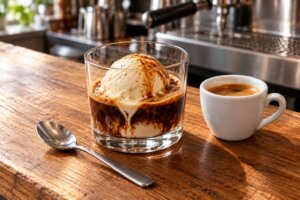
Affogato: what it is and how to make one
An affogato is an Italian dessert: a scoop of vanilla ice cream drowned in hot
Oct

This site is protected by reCAPTCHA. The Google Privacy Policy and Terms of Service apply.