Which espresso machine should you choose for a café? Six to consider
The best machine in a café is its heart and its pride. Some people care about hand-built quality and the history of the brand. Others care about the flavour, which has to be right every single time. On top of that, the machine has to be reliable and it has to last.
How do you choose a commercial espresso machine that does what you need? And how do you tell them apart?
Which espresso machine for a café?
1. How to choose a commercial machine for a café
Buying a machine for a café means weighing up a lot of factors, and they can either help the business grow or hold it back.
How many customers
The number of customers, meaning how many coffees one machine puts out in a day, is the key factor. Machines come in one, two and three group versions. A one-group machine brews two single espressos at once, a three-group machine six. Bear in mind, though, that under SCA (Specialty Coffee Association) standards one coffee normally means a double espresso. So even on low volumes, a single group can fall short.
Alongside the size of the machine, think about space for one or two baristas at the bar. Two working together speeds up service, though it will not speed up extraction. A three-group machine can handle up to 60 coffees an hour, and a two-group should cope with 10 kg of coffee a week. A one-group machine covers 5 kg a week, but if you have busy spells it is worth going to two groups: espresso comes out faster and you get two steam wands.
Espresso quality
Espresso quality is what brings a customer back and gets your café recommended. A commercial machine, a proper grinder and a trained barista all feed into that. Choose a machine with automatic dosing, a modern motor that saves water and energy, and automatic control of water and steam temperature.
Ease of use and ergonomics behind the bar
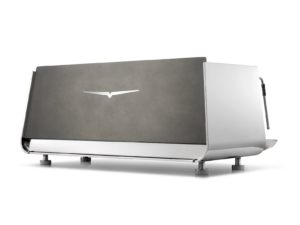
A compact, ergonomic, intuitive machine makes the work faster and the customers happier. Think about how many people will be on the machine at once, how many espresso grinders you will run and how big they are. Modern cafés often pick low-profile machines so baristas can talk to customers over the top of them. The Eagle One and the Victoria Arduino Black Eagle are both built that way.
Professional installation and servicing
If you are buying a high-end machine, make sure a professional installs it, or you risk the warranty. We handle installation and servicing, including out-of-warranty work, plus scheduled maintenance and repairs. Need a hand? Write to us: serwis@colbergcoffee.pl
Running costs: less water, less energy
Machines from Simonelli Group come with the environmental features the group has built its development around. Check whether the machine is made from recyclable, environmentally sound materials. Smaller boilers heat up faster and use less water and energy. Modern machines have autopurge and automatic cleaning, which affects the coffee as well as saving time and resources.
The machine and the look of the room
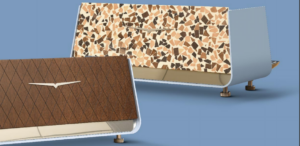
The machine sets the tone of a café. It should suit the interior and look good doing it. A classic Heritage series machine will not sit right in a modern fit-out, and a Black Eagle would look odd in a nineteenth-century restaurant.
Types of commercial espresso machine on the market
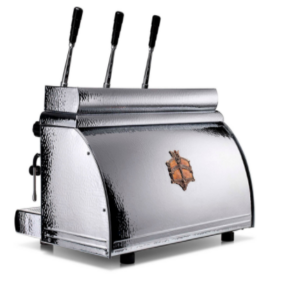
Lever machines
The barista decides how long pre-infusion runs and how the shot is pulled. These suit venues with low to medium traffic.
Single boiler machines
An older design with one large boiler. Slow to heat, heavy on energy and water. Being replaced by newer designs.
Machines with a separate boiler per group
More economical units that use less energy.
Bean-to-cup machines
Built for homes or offices, where self-service is the point.
Buying, leasing, renting and writing it off
A commercial espresso machine can be bought outright, rented or leased. In Poland the machine and its accessories can be written off against tax if they are used for business, and the tax can be reclaimed whether you buy or rent.
Commercial espresso machines
2. Which commercial machine for a large specialty café?
Large cafés need professional service, top quality coffee and speed. Here is our pick of the best-looking machines:
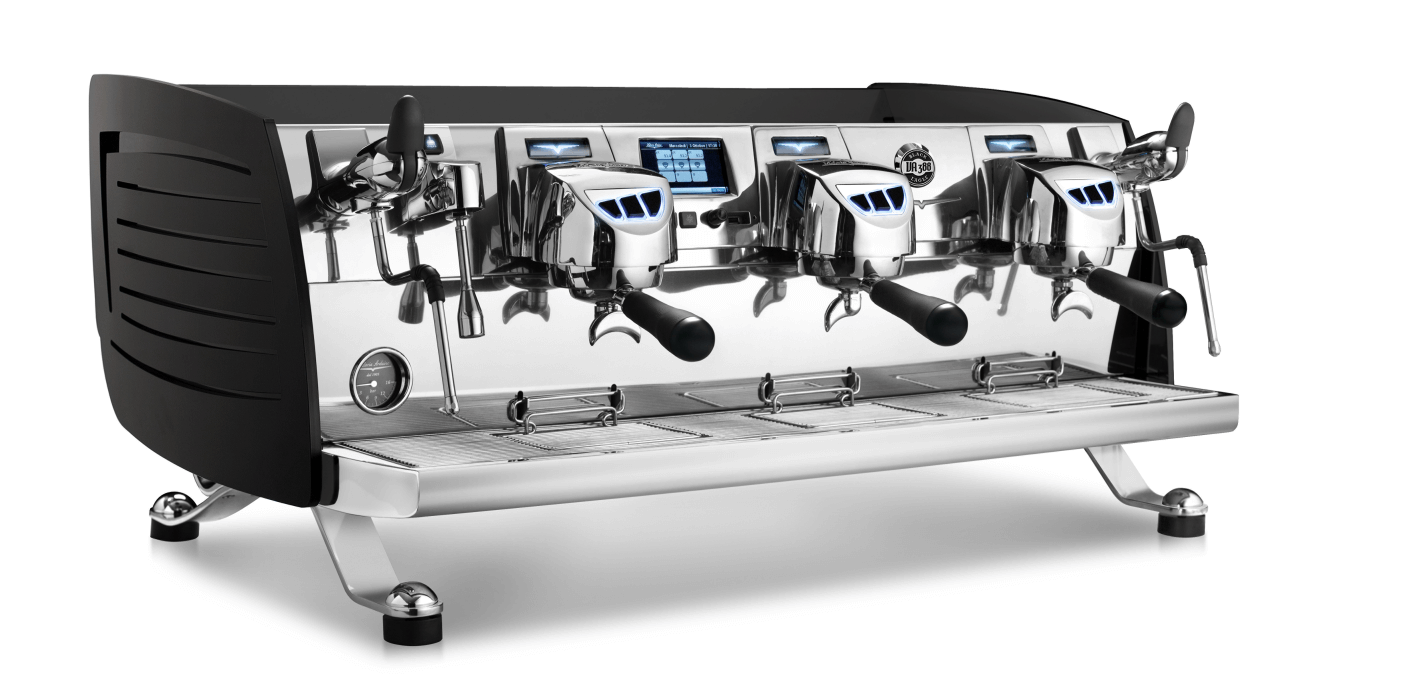
Victoria Arduino Black Eagle Gravitech
The official machine of the World Barista Championship. Gravitech technology gives you repeatability and consistency cup after cup, with precise temperature and pressure control. It comes with the SIS and T3 systems and Cool Touch for safe working.
Victoria Arduino The Eagle One
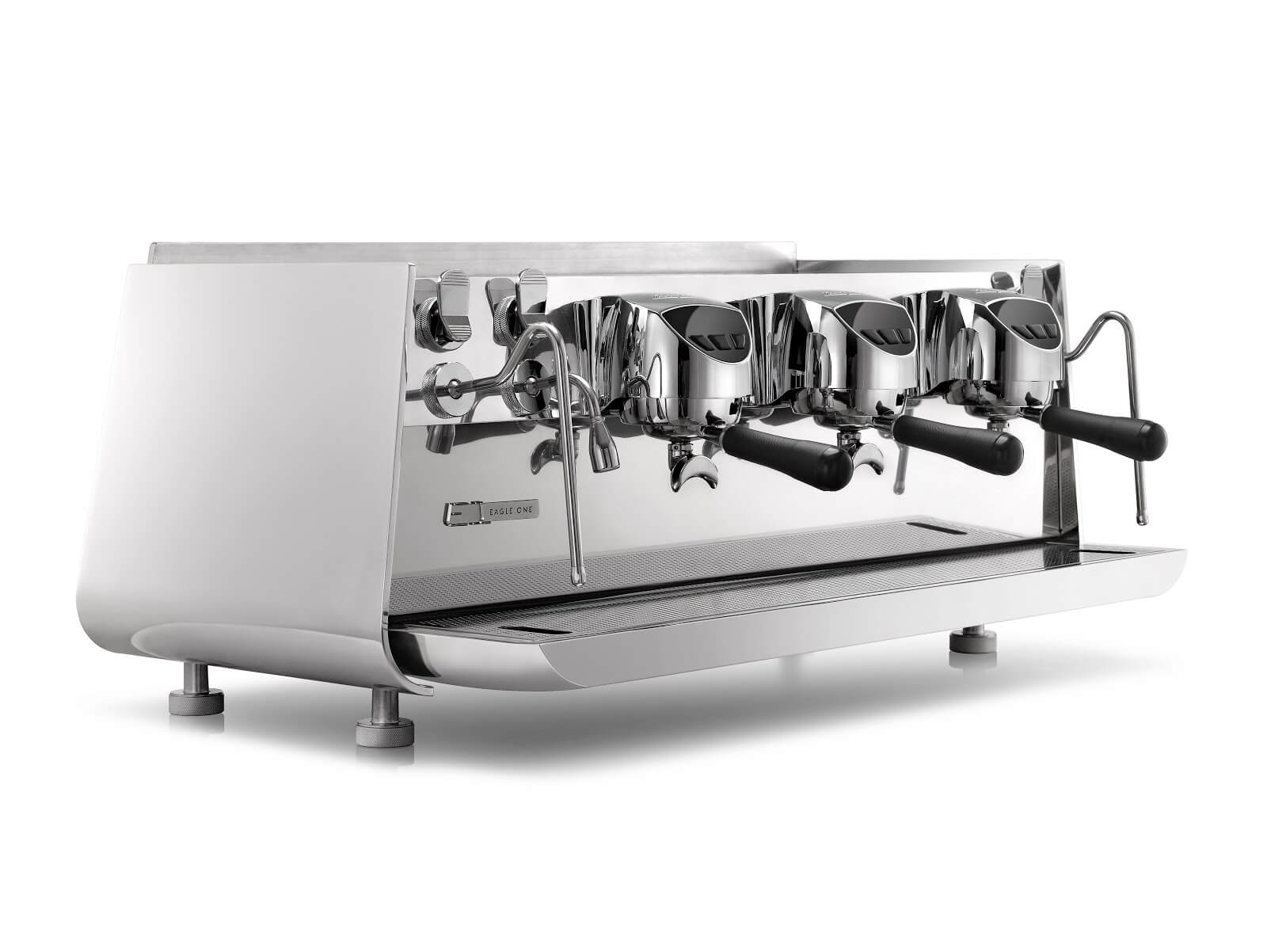
An inventive machine built around the NEO and T.E.R.S. systems, and one of the best-selling café machines in Europe. It uses less energy and less water. It has autopurge, a separate boiler for each group and remote control.
Read the review of this machine written by a barista who works on one every day.
Nuova Simonelli Aurelia Wave
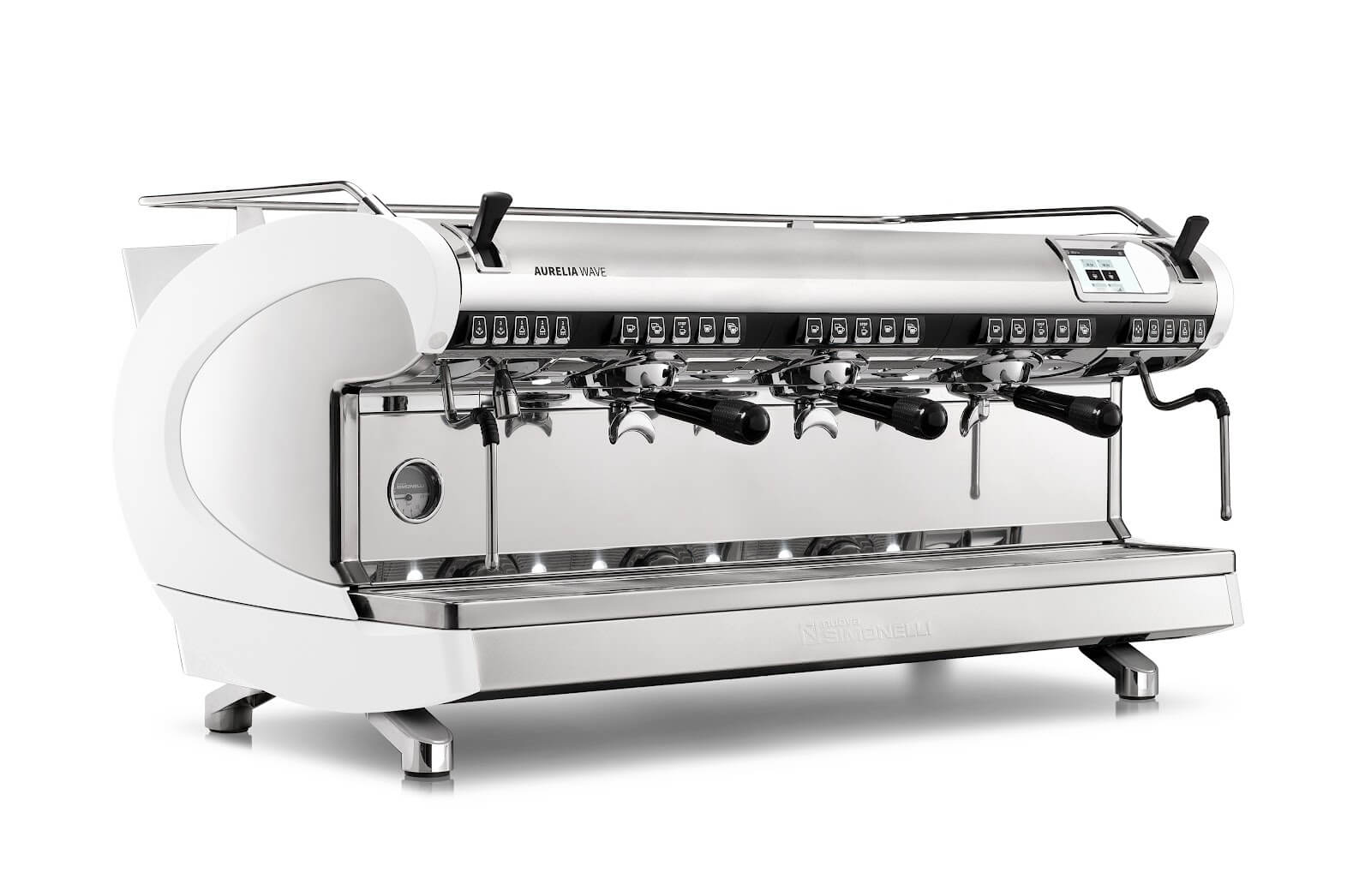
The third generation of the Aurelia, with T3 technology, Smart Water Technology and the Pulse-Jet system. Energy efficient and easy to work on. Made for cafés with high volumes.
Heavy-duty coffee machines
3. Which two-group machine works best in a small venue?
Smaller cafés need machines that are compact but still commercial. Here is what we would suggest:
Nuova Simonelli Appia Life
The latest version of the popular Appia. Simple to use, reliable, and available in several colours. It has the SIS system, Cool Touch and automatic cleaning. A very good café machine, particularly for smaller places and new openings.
Victoria Arduino White Eagle
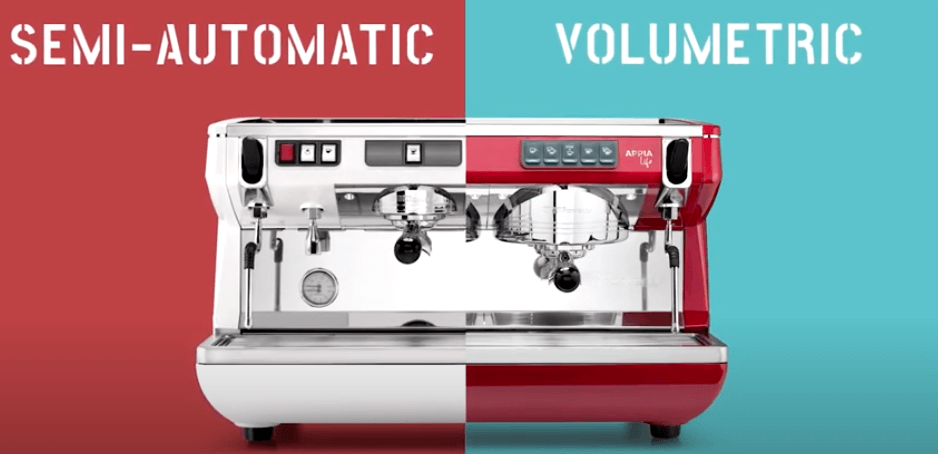
An elegant machine with T3 and SIS. Available as a lever version or a traditional one. Ergonomic, with an LCD display and automatic cleaning.
Victoria Arduino Adonis Style and Core
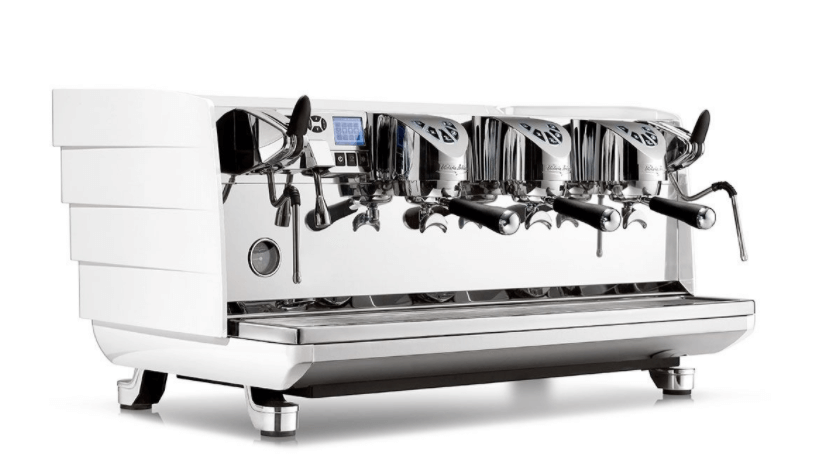
A compact machine with the HEES system and volumetric dosing. Good looking, and the espresso quality is excellent.
4. How the best café machines from Nuova Simonelli and Victoria Arduino are made
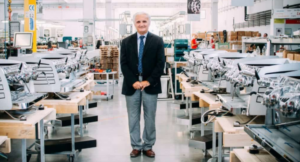
Nuova Simonelli and Victoria Arduino joined forces to create Simonelli Group, which builds some of the best espresso machines there are. The story starts in the early twentieth century, when Pier Teresio Arduino shook up the coffee market with his compact machine. Simonelli began in 1936 and quickly became a leader in the trade.
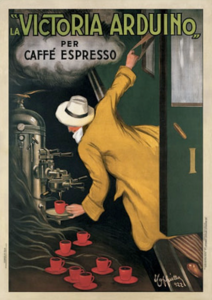
5. The Heritage series: the Victoria Arduino legacy
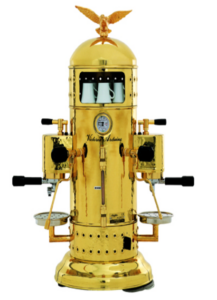
The Heritage machines are hand built and made for elegant rooms. The best known model is the Venus Bar, available with volumetric dosing or in the traditional version. If you are after something handsome, the Athena Leva and the Theresia are both worth a look.
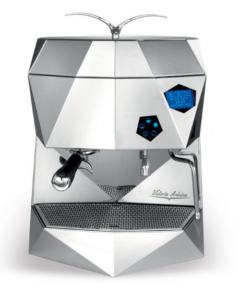
6. Installing and looking after the machine
Professional installation
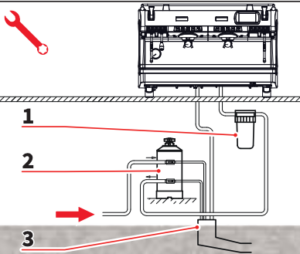
The machine should be installed by professionals. The counter has to be solid and the room temperature right. The machine needs a water supply, a drain and a water filter.
Keeping it clean
Regular cleaning is what keeps the machine working. Use products made for the job, or you risk breakdowns and the warranty with them.
In short, the machine you choose comes down to customer numbers, espresso quality, ease of use, ergonomics, servicing, running costs and the style of the café. Look closely at what each manufacturer’s technology actually does for the coffee and for the people drinking it.
Use proper commercial cleaning products on your machine. You will find them at Colbergcoffee.pl
The grinder is the machine’s other half
Choosing the right grinder matters as much as choosing the machine. The grinder shapes the quality and flavour of the espresso, and with it what your customers think of you. A good grinder gives you consistent particle size, which is what even extraction and full flavour depend on. Without one, even the best machine cannot get everything out of the beans. Invest in a grinder that works with your machine. Have a look at our commercial coffee grinders.
If you have questions about choosing kit for your café, write to us.
