






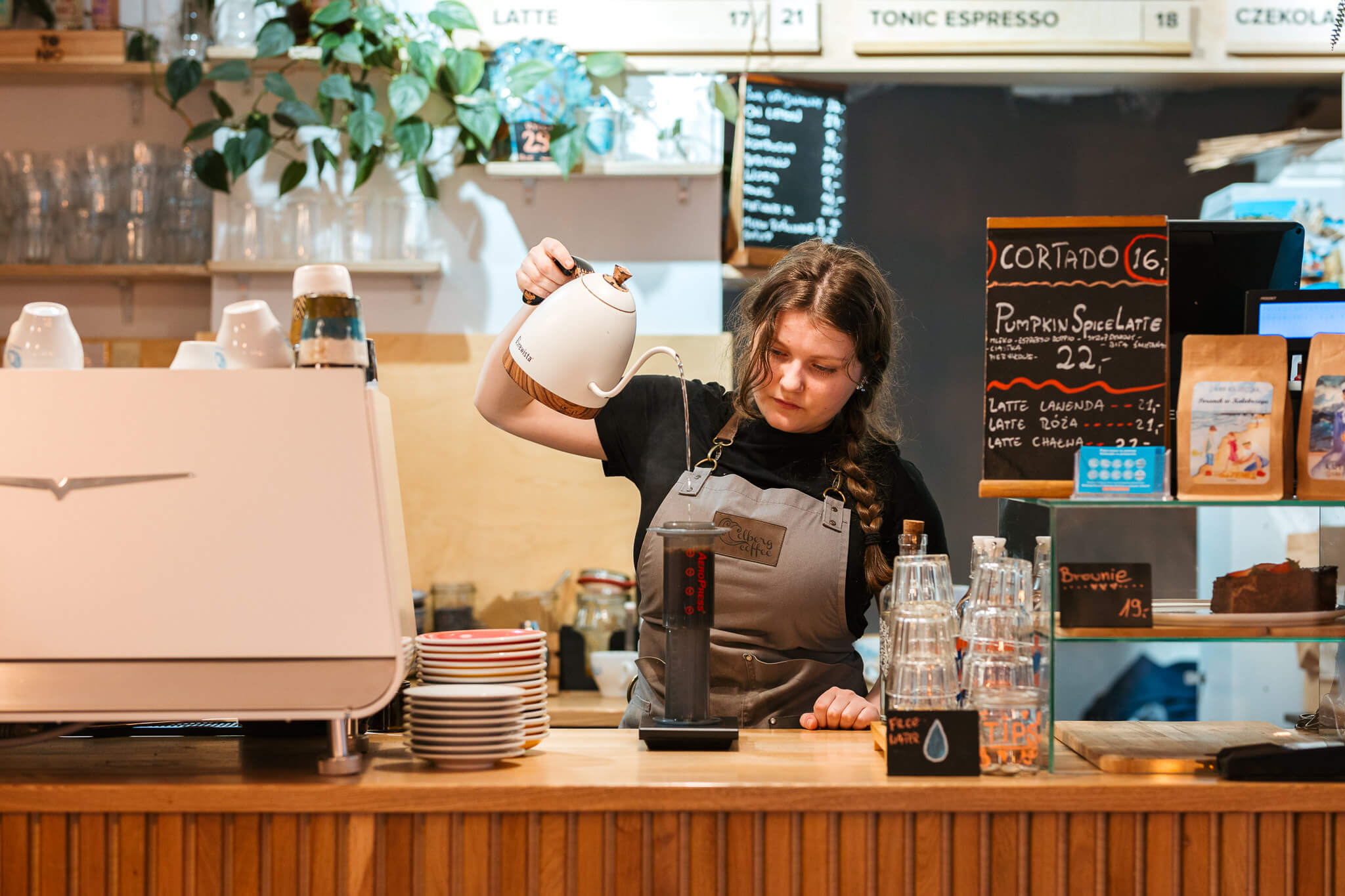


Espresso is more than 90% water, and filter coffee contains even more, usually around 98-99%. That’s why choosing the right water for coffee makes such a difference to flavour. The same beans can taste quite different when brewed with tap water or water with a carefully balanced mineral content. The biggest differences are usually in acidity, sweetness and overall flavour balance.
Water also affects the condition of your espresso machine. Limescale builds up on heating elements and inside pipes, restricts water flow and can eventually cause breakdowns. In this article, I’ll explain which water to use in an espresso machine at home, in the office or in a cafe. If you mainly brew filter coffee, read our guide to the best water for filter coffee.
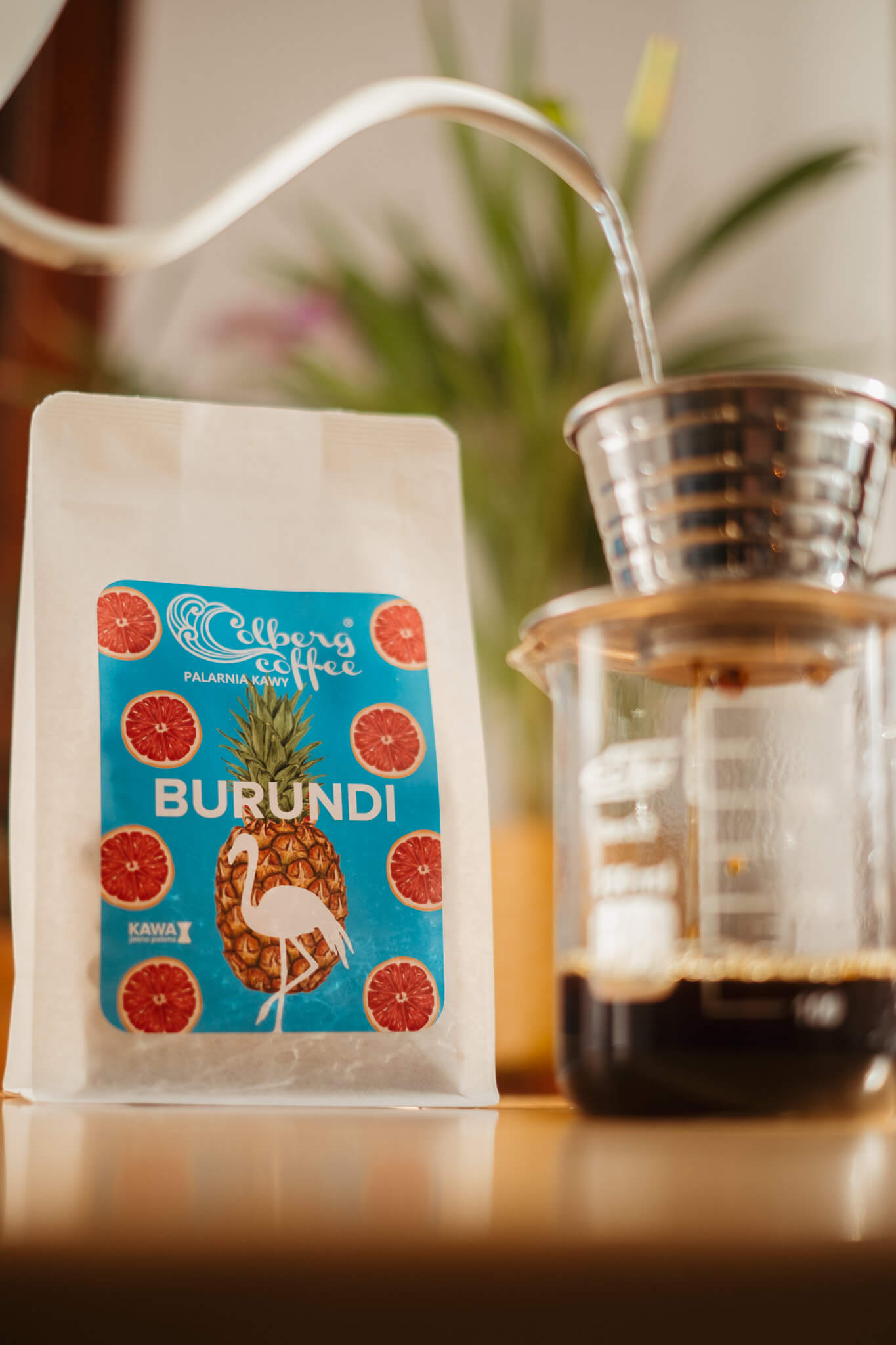
Water for coffee: how minerals and hardness affect flavour
Water contains dissolved substances, including calcium, magnesium and bicarbonates. Their total concentration is measured as TDS, expressed in mg/l or ppm. However, a TDS reading doesn’t tell you which minerals are present in the highest amounts. Two waters with the same TDS can affect coffee flavour in very different ways.
- Magnesium and calcium affect extraction and how we perceive coffee flavour. That doesn’t mean more of these minerals is always better. Their proportions and the rest of the water’s composition matter too. Too little mineral content, or the wrong mineral balance, can throw the flavour of your coffee off balance.
- Bicarbonates account for much of the water’s alkalinity and help buffer acids. Too much can reduce pleasant acidity and mask fruity notes in coffee, making the brew taste less lively.
- Carbonate hardness is one of the main water parameters associated with limescale formation in espresso machines. These deposits consist mainly of calcium carbonate. Temperature and other water properties also matter. That’s why checking total hardness alone isn’t enough.
Historical guidelines from the Specialty Coffee Association, formerly the SCAA, recommended a target brewing water TDS of around 150 mg/l, with an acceptable range of 75-250 mg/l. They also recommended calcium hardness of approximately 68 mg/l expressed as CaCO3, alkalinity of around 40 mg/l as CaCO3 and a pH close to 7. However, these aren’t universal requirements for every espresso machine. Always check the machine manufacturer’s recommendations too. We explain how to measure dissolved solids in brewed coffee in our article on TDS in coffee.
Choosing water for coffee machines: a comparison
| Water type | Coffee flavour | Effect on the machine |
|---|---|---|
| Hard, unfiltered tap water | Flat, slightly bitter, muted aromas | Rapid limescale buildup |
| Water from a filter jug | Usually noticeably better, cleaner flavour | Less limescale, but the cartridge needs regular replacement |
| Water from a filter connected to the espresso machine | Consistent, predictable flavour | Good protection, standard in commercial coffee settings |
| Reverse osmosis water without remineralisation | Flat, hollow, sometimes unpleasantly sharp | Can be aggressive towards metal components |
| Reverse osmosis water with remineralisation or controlled blending | Very good, controlled flavour | Good protection when properly adjusted |
| Highly mineralised bottled water | Flat, heavy flavour | Significant limescale buildup |
| Low-mineral bottled water | Often good | Depends on its composition, check the label |
| Distilled water | Flat, hollow flavour | Not recommended, some machines don’t work properly without minerals |
Water for your home espresso machine
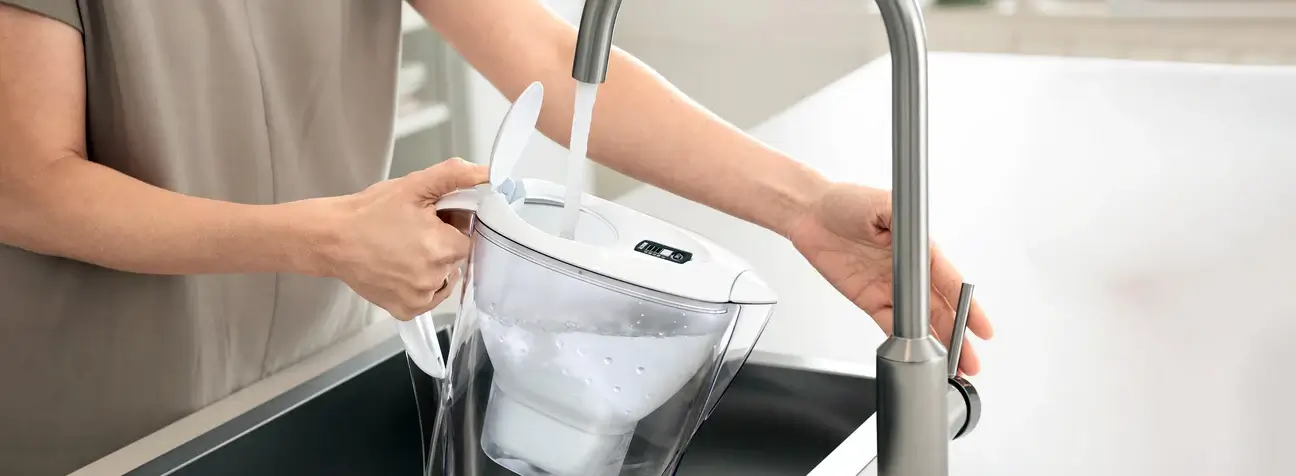
At home, the easiest place to start is a water filter jug. Activated carbon reduces chlorine and some substances that affect the taste and smell of water. A cartridge containing a suitable ion exchange resin can also reduce carbonate hardness. However, not all jug filters work in the same way. A mechanical filter alone doesn’t remove dissolved minerals, so check the cartridge’s composition and intended purpose before buying.
A few practical rules worth following every day:
- Replace the cartridge according to the manufacturer’s instructions. Once its capacity is exhausted, the filter becomes less effective. If used incorrectly, it may also reduce water quality.
- Don’t leave water sitting in the espresso machine’s tank for several days. Replace it regularly, ideally with fresh water every day.
- If your machine has a built-in water tank filter, use it according to the manufacturer’s instructions and remember to replace it. Also consider whether you’re already filtering the water in a jug, so you don’t reduce its mineral content more than necessary.
- Check your machine regularly and descale it according to the manufacturer’s instructions. Even filtered water can cause limescale buildup. However, don’t use descaling products in machines where the manufacturer specifies a different maintenance procedure.
If you prefer bottled water, start with a low-mineral option. Check the label for calcium, magnesium and bicarbonate content. Highly mineralised water can cause heavy limescale buildup. But a low total mineral content doesn’t automatically mean the water has the right balance. For more advice on home coffee equipment, read why your coffee doesn’t taste like it does in a cafe.
Water filtration in offices and cafes
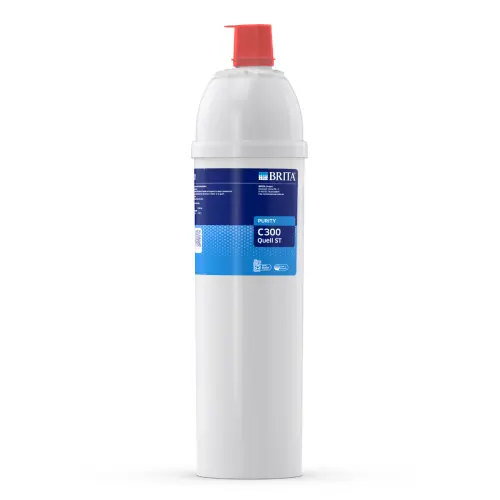
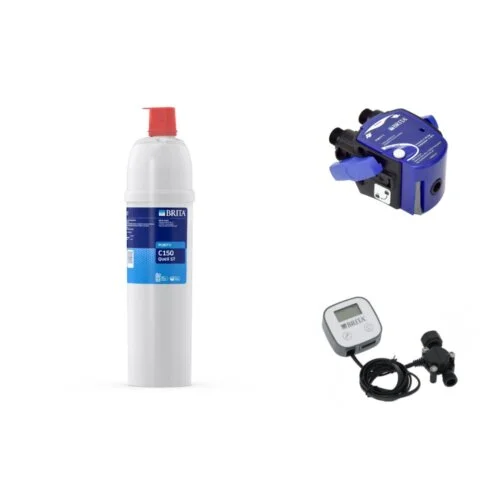
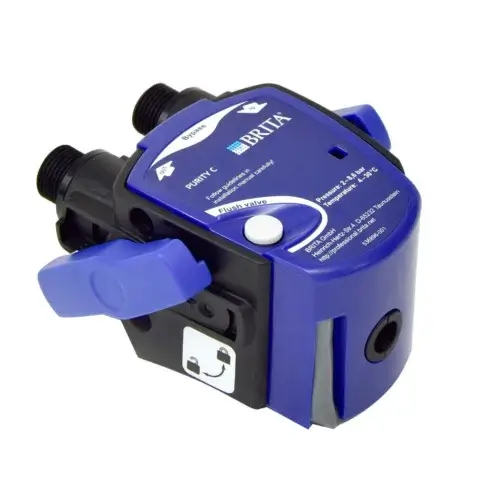
An espresso machine connected to the mains water supply should receive water that meets the manufacturer’s specifications. Commercial coffee businesses often use BRITA PURITY C filters. Cartridges from the Quell ST range use ion exchange to reduce carbonate hardness and activated carbon to improve the taste and smell of water. A filter head with an adjustable bypass lets you adapt the treatment level to the water’s properties. Remember that not all PURITY C cartridges work in the same way.
Cartridge size should be selected according to water quality and expected consumption. The filter must be replaced when it reaches its rated capacity or maximum service life, whichever comes first. For many BRITA PURITY C cartridges, the manufacturer specifies a maximum of 12 months. In a busy cafe, it’s worth installing a flow meter to monitor cartridge usage. We help customers choose filtration systems for their espresso machines and replace used cartridges. Read more in our article on espresso machine water filter replacement in Kołobrzeg.
If you use a fully automatic coffee machine in an office, you also need suitable water filtration and regular machine cleaning. You’ll find useful maintenance products in our coffee machine cleaning products category. If you use a traditional espresso machine, it’s also worth learning how to clean it properly. We explain the steps in a separate cleaning guide.

Reverse osmosis: when is it worth using?
Reverse osmosis uses a membrane that removes most dissolved salts and many other contaminants. The resulting water has a very low mineral content. Before connecting it to an espresso machine, check the manufacturer’s water requirements. Many installations use remineralisation or controlled blending with water of a known, suitable composition. This makes it possible to achieve the right water balance for brewing coffee while keeping the machine operating safely.
Reverse osmosis is particularly useful when tap water is very hard or contains high levels of dissolved substances that a standard filter cannot remove effectively. However, you also need to consider installation costs, membrane replacement and water consumption. Some water is discharged as concentrated wastewater. The amount depends on the system’s design and efficiency, so check the technical specifications before buying.
We also offer reverse osmosis filters. You’ll find them in our reverse osmosis category, while cartridges and filter heads for espresso machines are available under BRITA filters. You don’t always need a reverse osmosis system. Sometimes a properly selected ion exchange cartridge is enough. If you’re unsure which solution is right for your business, get in touch with us. We’ll help you choose a suitable filtration system. It’s useful to have your water hardness measurements and other water quality results ready beforehand.
Water isn’t just about minerals: temperature and freshness
Coffee is often brewed with water at around 90-96°C. Water that’s too cool can limit extraction, while higher temperatures can encourage more intensive extraction of flavour compounds, including bitter ones. However, this isn’t a fixed rule. Roast level, grind size and brewing time all matter. In a traditional espresso machine, temperature is controlled by the heating system. For filter coffee, the kettle and pouring technique also play a role. Find out more in our article on the best temperature for brewing coffee.
If your espresso tastes unpleasantly sour despite using suitable water, check your grind size, extraction time and brewing temperature. There could be several causes. You’ll find more advice in our article on sour espresso from a coffee machine.



Water for coffee and espresso machines: frequently asked questions
How does water affect coffee flavour?
Calcium, magnesium and other minerals affect extraction and how we perceive flavour. Bicarbonates buffer acids, and too much can reduce fruity acidity. However, not all hard water produces flat-tasting coffee. The right mineral composition matters more than the TDS reading alone.
What’s the best water for an espresso machine?
Water that meets the machine manufacturer’s requirements and produces good-tasting coffee. At home, water from a properly selected filter jug or low-mineral bottled water often works well. In offices and cafes, a filtration system matched to the local water supply is usually the best approach.
Can I use mineral water in an espresso machine?
Yes, but you need to check its composition. Highly mineralised water can encourage limescale buildup and negatively affect coffee flavour. Low-mineral water is often a better starting point. Pay particular attention to calcium, magnesium and bicarbonates, as well as the espresso machine manufacturer’s requirements.
Is distilled water suitable for an espresso machine?
It’s generally not recommended for direct use in an espresso machine. The absence of minerals can change the coffee’s flavour profile, although it doesn’t always produce a flat-tasting brew. In some machines, very low water conductivity can also interfere with water level sensors. The safest option is to use water that meets the manufacturer’s specifications.
Does a water filter jug soften water?
Yes, if it contains a cartridge with a suitable ion exchange resin. This type of filter can reduce carbonate hardness. Activated carbon alone reduces chlorine and some substances that affect taste and smell, but it doesn’t remove hardness. That’s why you should always check which type of cartridge you’re using.
What TDS should water for coffee have?
Historical SCAA guidelines recommended a target TDS of around 150 mg/l, with an acceptable range of 75-250 mg/l. However, that doesn’t mean every water within this range is suitable. Hardness, alkalinity and mineral balance also matter. For espresso machines, always check the manufacturer’s water requirements.
How often should I replace an espresso machine water filter?
Follow the manufacturer’s recommendations. Replace the filter when it reaches its rated capacity or maximum service life, whichever comes first. For many BRITA PURITY C cartridges, the maximum period is 12 months. With hard water and high consumption, the filter may need replacing sooner. A flow meter helps you monitor its remaining capacity.
Przeczytaj też
Caffè latte: what it is, ratios and recipe
Caffè latte step by step: espresso to milk ratios, steaming milk on an espresso machine
Nov

Viennese coffee: recipe, Einspänner and Wiener Melange
Viennese coffee step by step: which cream to use, how to whip it so it
Nov
Coffee with lemon (espresso romano): recipe and facts
Coffee with lemon step by step: espresso romano with lemon peel, iced versions, mazagran and
Nov

Bulletproof coffee: recipe, calories and what research says
Bulletproof coffee: a recipe with exact amounts, calories, butter vs ghee, MCT oil and how
Nov

Frappe: how to make Greek iced coffee
Greek frappe step by step: ratios, sketos, metrios and glykos, shaking technique and mistakes that
Nov
How to make filter coffee: ratio, grind size and temperature
How to make filter coffee: how much coffee per litre of water, how to grind,
Oct
Coffee on an empty stomach: is it bad for you? What the research says
Is coffee on an empty stomach bad for you? What research says about stomach acid,
Oct

Affogato: what it is and how to make one
An affogato is an Italian dessert: a scoop of vanilla ice cream drowned in hot
Oct

This site is protected by reCAPTCHA. The Google Privacy Policy and Terms of Service apply.