




Popularne wyszukiwania
Kategorie
Kawa
Kawa Speciality
Ekspresy
Akcesoria
Kubki termiczne
Delikatesy
Syropy do kawy
Herbata
Do kawiarki
In a café, chocolate means two quite different products, even though shops put them side by side. Couverture callets are for serving thick drinking chocolate and for baking; instant chocolate powder is for vending and bean-to-cup machines with a powder module. Below we explain which to choose for what, so you do not buy a product that will not work with your equipment.
Couverture or instant: what is the difference
Couverture is real chocolate with cocoa butter, sold as callets instead of bars. You melt it in hot milk or in a hot chocolate dispenser with a stirrer. It gives a thick drink with a full cocoa flavour and a natural sheen, in the style of Italian cioccolata calda, drunk from a small cup with a spoon.
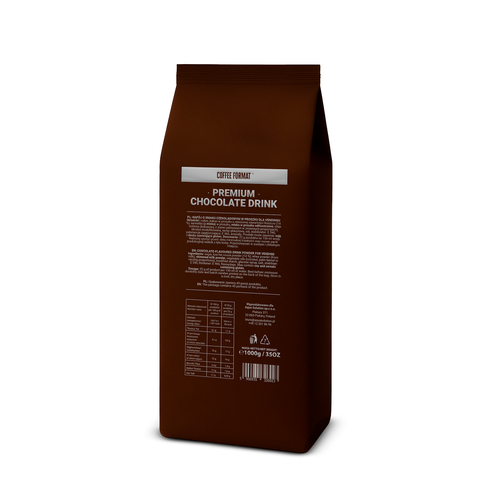
Instant chocolate is a powder that dissolves in hot water. The drink is thinner, closer to cocoa. It costs less per serving, takes a few seconds to prepare and is the only option if chocolate has to come out of a vending machine or a bean-to-cup machine.
The choice is not about quality but about equipment and menu. For a dispenser with a stirrer, use couverture. For a machine with a powder canister, use instant. It does not work the other way round: callets will clog the machine’s doser, and powder in a dispenser will not build thickness without thickeners.
How much chocolate per serving
With couverture, allow 30 to 50 g of callets per 200 ml cup, depending on how thick you want the drink. That gives roughly 20 to 30 servings per kilo. With instant chocolate, a machine usually doses 20 to 25 g per cup, or about 40 to 50 servings per kilo.
These are guidelines from café practice, not a manufacturer’s standard. The thickness of the drink is a decision for your menu, not a parameter on the pack.
What else couverture is good for
Callets with a high cocoa butter content work wherever chocolate has to be fluid and glossy once melted. In patisserie that means ganache and creams, glazes and drip cakes, pralines, bars and chocolate fountains. In the kitchen it means brownies and muffins, where a handful of callets stirred straight into the batter leaves pockets of melted chocolate.
The callet format matters in practice. Every piece is the same size, so they all melt at the same rate and there are no unmelted lumps that make the chocolate burn. You measure exactly what you need, with no chopping and no waste from crumbs.
How to melt it without wasting product
Chocolate does not like high heat or water. The safest way is a bain-marie, with the bottom of the bowl not touching the water, or the microwave in short bursts of 15 to 20 seconds, stirring each time. Even a drop of water in melted chocolate makes it seize, so the bowl and spatula must be completely dry.
Store chocolate in a dry place at room temperature, away from strong-smelling foods, because cocoa butter easily picks up other aromas. Do not keep it in the fridge: moisture causes a white bloom on the callets.
Chocolate and serving equipment
If you are just planning to add chocolate to your menu, you need a machine that keeps the drink at a constant temperature and in constant motion. In a café, a hot chocolate dispenser with a stirrer does the job: the product does not settle on the bottom, does not burn and is ready to serve all day. You will find one in the hot chocolate dispensers category.
To make it you need nothing more than a pan and a whisk, but once you sell more than a few servings a day, preparing every cup by hand stops making sense.